


2026 Best 1.5mm Stainless Steel Sheet for Global Buyers

Choosing the right 1.5mm Stainless Steel Sheet can influence a project’s cost, durability, and finished appearance. Buyers often specify this gauge for equipment panels, kitchen surfaces, enclosures, and light fabrication. It offers a useful balance between manageable weight and practical rigidity. On a workshop table, a sheet should feel substantial without becoming difficult to cut, lift, or form. Thickness matters. But it is only one part of the decision.

Grade, surface finish, dimensional tolerance, and processing needs all deserve attention. A brushed surface may suit visible interiors, while a different finish may be more practical where frequent cleaning is expected. Buyers should also confirm the material grade and request traceable mill documentation when the application requires it. Details can vary between suppliers and markets, so specifications should be checked rather than assumed. A quotation that lists only “stainless steel” leaves important questions unanswered.

There is no universal best sheet for every buyer. That is worth admitting. A lower purchase price may not represent better value if the material arrives with inconsistent thickness or a finish that needs extra work. This guide explores the factors global buyers can compare, including grades, finishes, quality checks, packaging, and supplier communication. The aim is practical: help readers ask clearer questions before ordering, while recognizing that final suitability depends on the project’s environment and fabrication method.
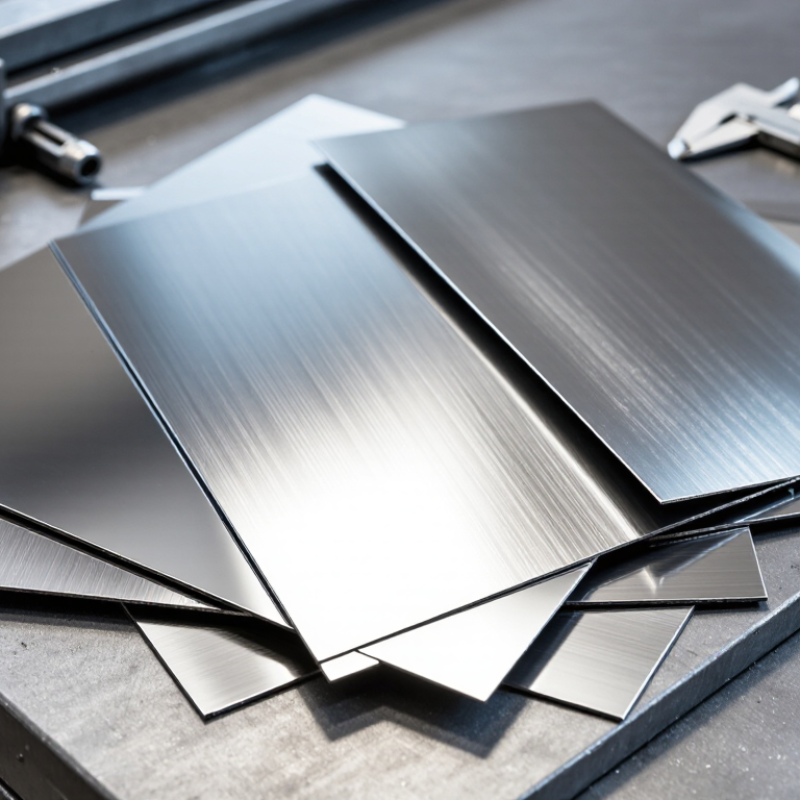
2026 Best 1.5mm Stainless Steel Sheet for Global Buyers

What 1.5 mm Stainless Steel Sheet Is: Thickness, Forms, and Standards

2026 Best 1.5mm Stainless Steel Sheet for Global Buyers

A 1.5 mm stainless steel sheet is specified by its nominal thickness, about 0.059 inches. Actual thickness can vary within the tolerance set by the product specification. The material may arrive as a flat sheet, a cut-to-size panel, or coil for further processing. Typical finishes include brushed, polished, and mill finish. Grade matters too: it affects corrosion resistance, formability, and suitability for the intended environment.

Tips: Check the material certificate for grade and standard. Measure several points with a calibrated micrometer. A single reading can miss variation across the sheet.

ASTM A240 covers stainless steel plate, sheet, and strip for pressure vessels and general applications; ASTM A480 gives general requirements. European buyers may encounter EN 10088 designations. Confirm the applicable standard and grade rather than relying on “stainless steel” alone. Also check surface finish, flatness, and edge condition against the drawing. A clean-looking face can still hide handling marks under protective film.

One point worth reflecting on: the thinnest sheet is not always the easiest choice. Bending radius, support, and transport can affect the final part, so review them before ordering.

Common Grades and Their Key Properties

For 1.5 mm stainless sheet, grade selection matters more than a small difference in thickness. Type 304 is a common general-purpose option for kitchen panels, enclosures, and formed parts. ASTM A240/A240M specifies 18–20% chromium and 8–10.5% nickel for 304. These elements support corrosion resistance and useful formability. A practical note: tight bends still need suitable tooling and bend radii.

Type 316 adds molybdenum, usually 2–3% under ASTM A240/A240M, alongside 16–18% chromium and 10–14% nickel. That addition improves resistance to pitting in chloride-bearing environments, such as coastal air or areas exposed to salt spray. It is not immune to corrosion. Rinsing and drying still matter. Type 430, with 16–18% chromium and little nickel, offers a lower-cost ferritic choice for indoor trim and appliance panels. It is magnetic, which can surprise buyers.

Scale matters, too. World Stainless reported global melt-shop production of 58.4 million tonnes in 2023, reflecting stainless steel’s broad industrial use. That figure does not identify the right grade for a particular job. For 1.5 mm sheet, compare the service environment, forming needs, and finish; a grade name alone can leave important questions unanswered.

How Sheets Are Made, Finished, and Quality-Checked

2026 Best 1.5mm Stainless Steel Sheet for Global Buyers

How Sheets Are Made, Finished, and Quality-Checked

A typical 1.5 mm sheet starts as a slab, which is heated and rolled into thinner material. Cold rolling can improve thickness control and surface consistency. Annealing softens the steel after rolling; pickling removes heat scale. The exact route varies by grade and mill. World Stainless Association’s 2024 production report records 58.4 million tonnes of stainless crude steel made in 2023. That scale makes traceable production records important, not optional.

Finishing may include a mill finish, brushing, or polishing. Each suits different visual and fabrication needs. Buyers should check the purchase specification against ASTM A240 and A480 requirements, where applicable. These standards address material and dimensional requirements; they do not make every sheet identical. Inspectors commonly measure thickness at several points, check surface defects under good lighting, and review the material test certificate. A glossy face can still conceal a problem at the edge. Reflection matters here: appearance alone is weak evidence.

Tips: Request the grade, finish, tolerance, and test documentation in writing. Ask where thickness was measured, and confirm the sampling method. A small edge burr is easy to miss. Keep a retained sample when the order is critical.

Where 1.5 mm Stainless Steel Sheets Are Used

2026 Best 1.5mm Stainless Steel Sheet for Global Buyers

Where 1.5 mm Stainless Steel Sheets Are Used

A 1.5 mm stainless steel sheet suits many applications that need a balance of formability and everyday durability. In commercial kitchens, it can become splashbacks, cabinet panels, and work surfaces. Its smooth face is easy to wipe, though scratches still show under bright lighting. In building interiors, fabricators use it for lift panels, trim, and wall cladding. It also appears in equipment covers and light-duty enclosures, where clean edges and consistent dimensions matter.

Tips: Match the grade and finish to the environment. Coastal air, cleaning chemicals, and frequent moisture can affect material choice. Ask for test documentation, and confirm thickness tolerance before ordering. A sample helps reveal the actual finish.

Thickness alone does not establish whether a sheet can carry a particular load. Check the design, forming method, support spacing, and joining process with a qualified fabricator. Deep bends may need careful planning to avoid visible marks. I have seen buyers focus on the sheet price, then overlook cutting and finishing costs. That comparison is incomplete. Even a well-specified sheet can disappoint if handling leaves dents or the finish does not suit the installation.

How Global Buyers Can Compare Suppliers and Specify Orders

Global buyers comparing 1.5 mm stainless steel sheet should compare verified specifications, not just quoted price. The International Stainless Steel Forum reported 58.4 million tonnes of crude stainless steel production in 2023. That scale shows a broad supply base, but not consistent sheet quality. Small details matter.

State the grade, finish, width, length, quantity, and required thickness tolerance in the purchase order. ASTM A480/A480M provides general requirements for flat-rolled stainless steel products; name the applicable edition and tolerance requirements. Ask suppliers for mill test certificates linked to heat numbers, plus records of thickness checks. A certificate alone is not inspection. Request a sample or agreed inspection plan, and clarify edge condition, surface film, and export packaging. Measure several points across the sheet with a calibrated micrometer. Even then, handling can affect flatness. I would not assume the lowest quote represents the lowest delivered cost; freight, protective packing, and rejected material can change the calculation.

2026 Best 1.5mm Stainless Steel Sheet for Global Buyers - How Global Buyers Can Compare Suppliers and Specify Orders
Comparison Item Options and Practical Benchmarks What Buyers Should Specify or Verify
Nominal thickness 1.5 mm (approximately 0.059 in) State that 1.5 mm is the nominal thickness. Request the applicable thickness tolerance standard and the permitted tolerance for the ordered width and product form.
Common grades 304 / 304L, 316 / 316L, and 430 are common sheet grades. Their corrosion resistance, composition, and magnetic behavior differ. Name the required grade and governing material standard. Do not treat grade equivalents across standards as automatically interchangeable; check the specified chemistry and mechanical requirements.
Grade selection 304 is widely used for general-purpose applications; 316 is often selected where greater resistance to chloride-containing environments is needed; 430 is a ferritic grade and is generally magnetic. Match the grade to the actual environment, fabrication, cleaning, and service requirements. These general descriptions are not a substitute for corrosion testing or engineering review.
Surface finish 2B: common smooth cold-rolled finish; BA: bright annealed finish; No. 4: brushed finish. Appearance and roughness can vary by producer and processing route. Specify the finish designation, which side or sides must meet it, any protective film, and whether a surface sample or agreed appearance limit is required.
Sheet dimensions Common mill and service-center formats vary by region; examples include 1,000 × 2,000 mm and 1,220 × 2,440 mm. These are examples, not guaranteed stock sizes. Give exact width and length in millimetres or inches, dimensional tolerances, edge condition, and whether sheets must be cut to size or supplied in standard format.
Approximate theoretical mass At 1.5 mm thickness and an assumed density of 7,900 kg/m³, the theoretical mass is about 11.9 kg/m². Actual mass varies with grade, dimensions, and thickness tolerance. Use the buyer’s specified density or the supplier’s agreed calculation method for estimates. Confirm whether invoicing is by theoretical weight, actual weight, or another agreed basis.
Material standards Examples include ASTM A240/A240M for chromium and chromium-nickel stainless steel plate, sheet, and strip; EN 10088-2 for stainless steel sheet/plate and strip for general purposes; and JIS G 4305 for cold-rolled stainless steel plate, sheet, and strip. Identify the standard and edition required in the purchase order. Confirm that the chosen grade, product form, finish, and delivery condition are covered by that standard.
Thickness and flatness tolerances Tolerances depend on the applicable standard, product form, width, and ordering conditions; one universal tolerance should not be assumed for all 1.5 mm sheets. Request the supplier’s written tolerance schedule and state the acceptance limits in the order. Agree how thickness, flatness, width, and length will be measured.
Inspection documents A material test certificate can report heat/lot identification and test results. Inspection-document formats and certification requirements depend on the contract and applicable standard. Specify required documents before ordering, such as a certificate of compliance or material test certificate, and require traceability between documents, labels, and delivered sheets.
Packaging and shipment Protection may include interleaving, surface film, moisture-resistant wrapping, edge protection, and secured pallets or crates, depending on route and handling. State film requirements, packaging method, pallet or crate requirements, shipment marks, destination, and any export or handling documentation needed.
Supplier comparison Compare like-for-like quotations: same grade, standard, nominal thickness, tolerances, finish, dimensions, quantity, documentation, and delivery terms. Ask each supplier to list exclusions, available production or stock status, lead time, inspection process, payment terms, and the agreed delivery term. Compare total landed cost, not unit price alone.
Order description example “Stainless steel sheet, 1.5 mm nominal thickness, specified grade and standard, specified finish, width × length, agreed tolerances, quantity, and required inspection documents.” Complete every bracketed choice before issuing a purchase order. Avoid relying on “equivalent” grades, unqualified finish terms, or unspecified tolerance assumptions.
Standards note Standard titles and requirements can change between editions. Confirm the current applicable edition and the exact contractual requirements with the supplier before placing an order.