What Is the Best Industrial Floor Repair Mortar from China?
Choosing the best Industrial Floor Repair Mortar from China starts with the floor, not the catalogue. A forklift aisle, a wet processing room, and a loading dock face different stresses. The right product must match traffic, abrasion, chemical exposure, temperature changes, and the repair depth. Look closely at bond strength, cure time, compressive strength, and the manufacturer’s surface-preparation instructions. A strong mortar cannot rescue a dusty or poorly prepared substrate.
Industry references offer useful context. The Global Cement and Concrete Association reports that cement production contributes roughly 7% of global carbon dioxide emissions, making long-lasting concrete repairs relevant to reducing repeat work. ACI 546R, Concrete Repair—Guide, and ICRI Guideline 310.2R provide professional guidance on repair selection and concrete surface preparation. These are technical references, not product endorsements; buyers should also request current test reports and verify that test methods match the intended service conditions. Small details matter. A damp slab, a sharp floor joint, or a short shutdown window can change the specification. The supplied material does not verify a direct quotation from a named individual expert, so attributing one here would be unreliable. For a sound comparison, assess documented performance, installation requirements, and support from the Chinese manufacturer—not price alone.
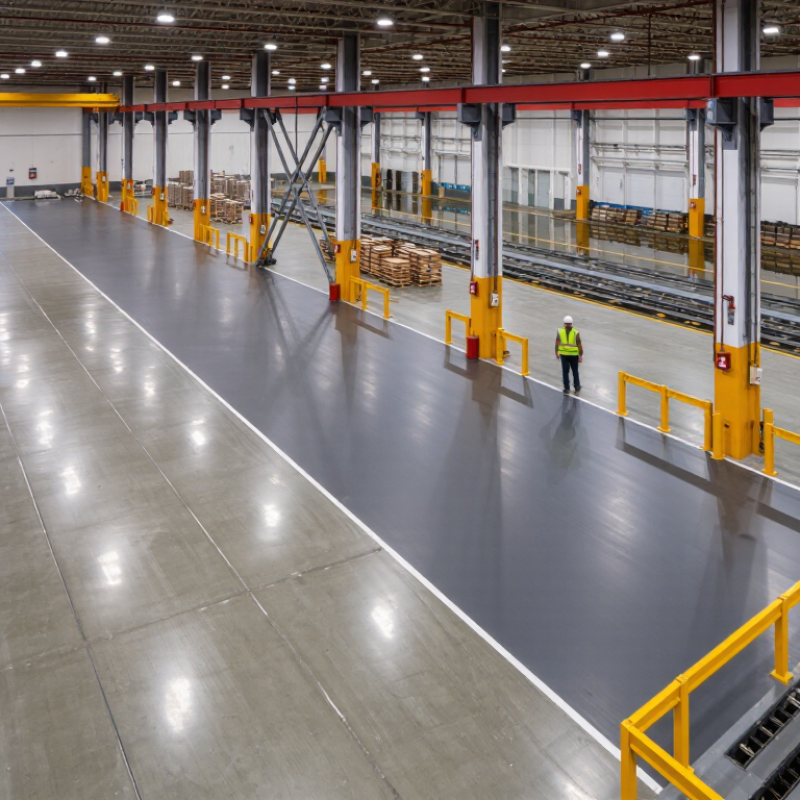
What Industrial Floor Repair Mortar Is and Where It Is Used
Industrial floor repair mortar is a cement-based, often polymer-modified material used to rebuild damaged concrete surfaces. It may contain graded aggregates and be formulated for rapid setting, high compressive strength, or chemical exposure. The right formulation depends on repair depth, traffic, moisture, and the time available before reopening. There is no single best mix for every floor.
Common applications include warehouse aisles, factory work areas, loading docks, and the edges around drains or machine bases. A chipped joint can catch pallet-truck wheels; a shallow spall can collect wash water. Not cosmetic. Proper repairs usually require removing loose concrete, cleaning and profiling the substrate, then placing and curing the mortar as specified. A patch can look sound but debond if the base is dusty or preparation is rushed.
The U.S. Environmental Protection Agency’s 2018 Advancing Sustainable Materials Management report estimated 600 million tons of construction and demolition debris were generated in the United States that year. Repairing a sound slab may avoid unnecessary replacement, but mortar cannot fix widespread movement or a failing base. The U.S. Bureau of Labor Statistics recorded 2.6 million nonfatal workplace injury and illness cases in private industry in 2023; this figure is not floor-specific, but it underscores why stable, maintainable walking surfaces matter. A practical choice balances bond, wear, cure time, and the actual exposure—not just the strength number on a data sheet.
What Is the Best Industrial Floor Repair Mortar from China? – What Industrial Floor Repair Mortar Is and Where It Is Used | Repair Mortar Type | What It Is | Common Industrial Uses | Suitable Damage or Conditions | Key Selection Considerations |
| Polymer-Modified Cementitious Mortar | A cement-based repair mortar modified with polymers to improve adhesion and reduce permeability compared with ordinary cement mortar. | Warehouses, production areas, loading bays, workshops, and general concrete floor repairs. | Surface scaling, shallow spalls, worn concrete, and localized defects where a cement-based repair is appropriate. | Check substrate preparation, application thickness, curing requirements, and compatibility with any floor coating. It is not automatically suitable for chemical exposure or heavy impact. |
| Rapid-Setting Cementitious Mortar | A cement-based repair material formulated to develop usable strength faster than conventional repair mortar. | Facilities where repair work must be completed during a short maintenance shutdown, including access routes and localized production-floor repairs. | Small or defined repair areas that need an early return to service, provided the repair depth and site conditions match the product instructions. | “Rapid setting” does not mean every floor can reopen at the same time. Confirm the stated traffic or service time, temperature limits, mixing procedure, and curing conditions. |
| Epoxy Resin Mortar | A resin-based mortar, commonly made with epoxy binder and graded aggregate, that hardens through a chemical reaction rather than cement hydration. | Industrial workshops, machinery bases, localized heavy-duty repairs, and areas requiring a dense, bonded repair surface. | Deeper or more demanding localized repairs where the selected system is suitable for the concrete condition and expected service environment. | Substrate moisture limits, surface preparation, mixing accuracy, working time, temperature, and chemical compatibility are important. Epoxy is not a universal choice for damp or moving substrates. |
| Polyurethane Cement Mortar | A polyurethane-cementitious composite designed for demanding service conditions; formulations and performance vary by system. | Food and beverage processing areas, commercial kitchens, washdown zones, and other floors exposed to moisture or temperature changes when the system is specifically rated for them. | Repairs or resurfacing in areas where thermal cycling, water exposure, or certain process chemicals may be relevant. | Verify resistance to the actual chemicals, cleaning regime, temperatures, and traffic at the site. Follow the system specification for substrate preparation and installation. |
| Non-Shrink Cementitious Grout or Repair Mix | A cement-based material formulated to limit shrinkage in its intended application; some products are designed primarily for filling or grouting rather than exposed floor surfacing. | Equipment baseplates, machine foundations, void filling, and selected concrete repairs where the product specification permits the intended use. | Voids or support areas that require a flowable or packable material, depending on the product type. | Confirm whether the material is rated for exposed traffic, abrasion, and the required repair geometry. Grout intended for equipment support may not be suitable as a wearing surface. |
Selection note: The best industrial floor repair mortar depends on the concrete condition, repair depth, moisture, expected traffic, chemical exposure, temperature, and required return-to-service time. Compare technical data sheets and installation instructions, and confirm suitability for the specific site before selection.
Common Types of Mortar for Industrial Floor Repairs
Common Types of Mortar for Industrial Floor Repairs
Industrial floor repairs commonly use polymer-modified cement mortar, rapid-hardening cement mortar, epoxy mortar, or polyurethane-cement mortar. Polymer-modified cement mortar suits shallow spalls and worn edges; it bonds to prepared concrete and is relatively straightforward to place. Rapid-hardening mixes help reopen aisles sooner, but fast setting leaves less time for mixing and finishing. ASTM C928/C928M assesses rapid-hardening repair materials through tests including compressive strength, length change, and freeze-thaw resistance. Early strength alone does not predict long-term floor performance.
Epoxy mortar is often selected for chemical exposure and heavy abrasion, while polyurethane-cement systems can suit wet areas with temperature swings. They still need compatible substrate conditions and careful installation. A practical selection check is the actual damage: a forklift-impact chip needs different repair depth and edge support than a broad, damp patch. ICRI Guideline 310.2R-2013 describes ten concrete surface-profile levels, CSP 1 through CSP 10, helping specify preparation before repair. That detail matters. Too smooth, and adhesion may suffer; too rough, and a thin patch may not cover evenly. One common mistake is choosing the strongest-sounding mix before checking moisture, traffic, cure time, and joint movement. Site trials can expose that mismatch, though they add time.
Typical Time to Light Foot Traffic After Industrial Floor Repair
Indicative time ranges for common repair mortar types. Actual reopening times vary with formulation, temperature, repair depth, and product instructions.
How to Match a Mortar to Floor Damage and Operating Conditions
What Is the Best Industrial Floor Repair Mortar from China?
How to Match a Mortar to Floor Damage and Operating Conditions
The best repair mortar depends on the damage, the substrate, and how the floor is used. A shallow spall near a pedestrian aisle needs a different repair than a deep pothole under loaded forklifts. Tap around the damaged area and remove loose material. A hollow sound may reveal weak concrete beyond the visible edge. Small details matter.
For shallow repairs, a polymer-modified cementitious mortar may suit concrete floors exposed to regular traffic. Deeper repairs need a product rated for the required application thickness and load. Where oils or cleaning chemicals are present, compare chemical-resistance data carefully; no mortar resists every substance. Epoxy-based repair materials can work in some settings, but moisture and surface preparation may limit their use. Check the technical data sheet for bond strength, cure time, and service-temperature range. The numbers need to match the real site.
Operating conditions can change the choice. A repair beside a washdown area must tolerate frequent wetting, while a busy loading bay may need a short return-to-service window. Confirm that the existing concrete is sound, clean, and prepared as specified. Dust left in a joint can weaken adhesion. It is easy to focus on compressive strength and overlook cure conditions. Even a strong mortar can fail when rushed, poorly mixed, or applied outside its thickness limits. A neat patch is not always a durable one.
Key Performance Standards for Comparing Chinese Mortar Products
Choosing an industrial floor repair mortar from China starts with the damage, not the catalogue. A forklift aisle needs abrasion resistance and dependable bonding; a chipped loading bay may also face impact and temperature changes. Look for test results that match the intended use, and check whether samples were tested under stated conditions. Numbers without methods are hard to compare.
Review compressive strength, bond strength, shrinkage, abrasion resistance, and working time. Ask for the test standard, sample age, and curing conditions behind each figure. A high compressive strength alone does not prove the mortar will stay attached to an oily or damp slab. It may not. Compare bond data with the prepared concrete surface and the repair depth. Check the specified water ratio, mixing time, and minimum application temperature, too. Small differences matter on site.
Curing speed should fit the plant’s shutdown window, but very fast setting can leave little time for placement and finishing. Request a technical data sheet and current, independently verifiable test reports. Confirm that the stated coverage and layer thickness suit the actual repair geometry. A trial patch is useful. It can reveal mixing or adhesion problems before a larger area is closed to traffic. One detail is easy to miss: even strong mortar can fail when loose concrete remains beneath the repair.
How to Verify a Supplier and Apply the Selected Repair Mortar
A reliable supplier should provide a current technical data sheet, safety information, and traceable batch details. Check whether the stated compressive strength, bond strength, and curing time suit your floor and downtime limits. Ask for references from comparable industrial repairs, not just polished photographs. Request a small sample and confirm its packaging, storage conditions, and shelf life. Details matter. If answers conflict across documents, pause and ask for clarification. Keep written records; supplier claims alone are not proof of performance.
Before application, remove loose concrete and contamination, then prepare the surface as the product instructions require. A clean, sound edge helps the mortar bond. Check moisture and temperature limits, and use primer only when specified. Measure water accurately; adding extra water may make placement easier but can weaken the repair. Mix only what workers can place within the stated working time. Press mortar firmly into the repair, finish it without overworking, and protect it during curing. Even careful work can fail if the surrounding slab keeps moving. Reopen the area only when the specified cure conditions are met, then inspect for cracking, hollow spots, and edge separation.