10 Best Lead Stained Glass Windows for Sale
Lead Stained Glass Windows can bring color, texture, and changing light into a home. Sunlight passing through ruby, amber, or pale blue panes can transform a quiet corner. Yet appearance is only part of the decision. Buyers should also consider dimensions, glass condition, frame requirements, and how a window will be installed.
This guide introduces ten options for people searching for stained glass windows for sale. It highlights practical details to compare, such as whether the panels are antique or newly made, how the glass pieces are joined, and whether measurements are clearly provided. Look closely at listing photos. Check for cracks, missing pieces, loose lead came, and signs of previous repairs. Ask sellers about mounting hardware and installation needs; older panels may require professional assessment before use. Details matter.
Style is personal, and product listings do not always tell the whole story. A richly colored panel might look different in a shaded room, while a simpler design may suit the space better. There is no perfect choice. Consider where the light falls, how much privacy you want, and whether the panel complements existing trim. This overview aims to make comparisons easier, not to promise that every window will fit every home. A little caution helps, especially when photos leave unanswered questions.
How Lead Came Joins 3–4 mm Glass in Traditional Window Panels
Traditional leaded stained-glass panels hold individual glass pieces within narrow lead channels called came. H-shaped came usually joins two neighboring pieces, while U-shaped came finishes an exposed edge. Its central section, or heart, separates the glass; the flanges fold over its faces. Fit matters.
For 3–4 mm glass, the came’s channel must suit the glass thickness. Handmade pieces can vary slightly, and uneven edges may need careful trimming. A glazier typically dry-fits the pieces before soldering came intersections. Solder secures the joints, while glazing cement worked beneath the flanges helps support the panel and reduce rattling. It is not a substitute for a sound frame or suitable structural support.
Small details count. Look closely at solder joints and the perimeter came, especially on a panel offered for sale. Ask what glass thickness the came accommodates and whether the panel is intended for a protective frame or direct installation. A tight fit is important, but forcing glass into a narrow channel risks damage. Even careful work has limits; lead can flex, and a large panel may need additional support.
Compare 10 Designs by Came Face Width: Common Profiles Span 6–13 mm
10 Best Lead Stained Glass Windows for Sale
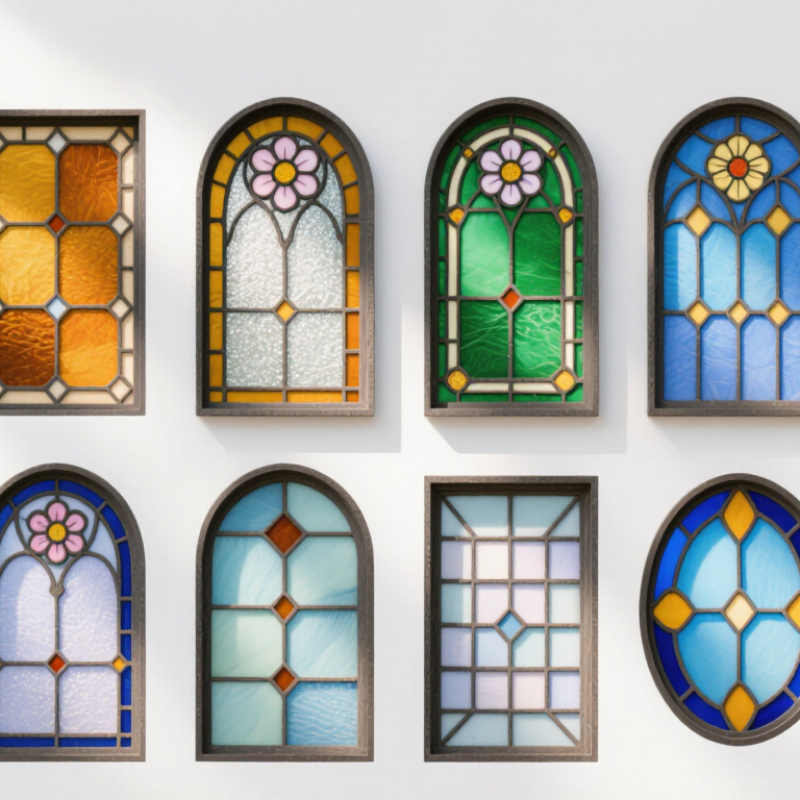
Compare the ten designs by came face width, not just color or pattern. The face is the visible strip of lead between glass pieces. Across these listings, profiles span 6–13 mm. A 6 mm came makes tight curves and small details feel crisp. At 13 mm, the dark lines look bolder and can suit larger geometric panels. The difference is easy to miss on a screen. Check a ruler beside the product photo, if one is provided.
Width alone does not prove strength. The National Park Service’s Preservation Brief 33, published in 1993, identifies came, solder joints, support bars, and panel condition as connected parts of a stained-glass inspection. That is a useful lens when comparing designs: ask for the panel dimensions and how it is supported, especially for a wide window. Look closely at corners, too. Thin came may keep a floral motif delicate, but crowded joints can appear busy. A wider profile may simplify the pattern, though it can hide small glass details. I would not choose by millimeters alone; a listing photo can distort scale, and that is an imperfect way to judge. Request a close-up or a measured drawing before deciding.
10 Best Lead Stained Glass Windows for Sale
Compare 10 design examples by came face width. Common profiles span 6–13 mm.
The values are representative examples across the commonly encountered 6–13 mm range, not measurements from specific product listings. Confirm the came width with the seller before purchasing.
Match Floral, Geometric, and Art Nouveau Patterns to Room Lighting
Floral, geometric, and Art Nouveau lead stained glass can change a room’s light as much as its appearance.
A floral panel softens direct sun into shifting patches, while clear geometric sections often preserve sharper lines on floors and walls. Curving Art Nouveau motifs may look lively in morning light but lose detail against a dark interior. Light changes everything. Check the window’s orientation, nearby trees, and wall color before choosing a pattern. A small glass sample held at the intended window can reveal more than a catalog image.
For a useful reference point, the National Fenestration Rating Council rates visible transmittance, or VT, on a scale from 0 to 1; higher values indicate more visible light passing through a rated window assembly. Decorative leaded panels may not carry a separate NFRC rating, so do not treat that number as a precise measure of the artwork itself. The U.S. Department of Energy’s daylighting guidance also stresses managing glare and balancing daylight with room use.
A bright south-facing window may suit denser floral glass, while a shaded hallway can benefit from lighter, more open geometry. Not always. Buyers can still misjudge colors: amber glass may feel warm in sunlight, then look subdued on a cloudy afternoon. Check it at different times before deciding.
Assess Panel Size and Reinforcement Needs for Broad Glazing
Broad glazing makes a leaded stained glass panel feel dramatic, but size changes the practical questions. A wide panel may need more support than a narrow window of the same height. Measure the opening, including the frame rebate, and confirm the finished panel dimensions with the seller. Leave room for fitting materials and seasonal movement. Small gaps matter.
Ask how the panel is reinforced. Support bars, perimeter framing, or a protective outer glazing layer can help manage flex, but the right approach depends on the opening and installation. Check whether the existing frame is sound and whether it can carry the panel’s weight. For a large or exposed window, have a qualified glazier or structural professional assess the opening before purchase. A photo alone cannot confirm that a frame is adequate.
Look for clear details about panel thickness, reinforcement placement, and installation requirements. Also ask how the panel will be transported; broad glass is vulnerable to twisting during handling. One easy-to-miss issue is the visual effect of added bars. They may improve support, yet interrupt the design. There is no perfect trade-off. Compare the panel’s scale with the room, then verify the support plan rather than relying on appearance alone.
Verify Glass Specifications, Lead Safety, Fit, and Installation Requirements
When comparing lead stained glass windows for sale, request the glass type, panel thickness, came or solder details, and total weight in writing. A photograph cannot confirm these specifications. Ask whether the panel is designed for a window opening, a protected interior panel, or use within an insulated glazing unit. These are different applications. I would also check how the seller defines “handmade”; that description alone says little about durability or safety.
Lead safety deserves a specific answer. Ask who will cut, solder, or repair the panel, and what dust-control and cleanup procedures they use. OSHA’s construction lead standard sets an airborne exposure action level of 30 micrograms per cubic meter and a permissible exposure limit of 50, averaged over eight hours (29 CFR 1926.62). These are workplace limits, not a test of a particular window’s risk. Keep the record. For occupied rooms, especially where children may touch the glass, discuss handling and cleaning with a qualified glazing professional.
Measure the opening at several points, then confirm the frame’s support, installation clearances, and whether the panel needs a protective outer pane. A tight fit can leave no room for movement or sealing. The U.S. Department of Energy’s Energy Saver guidance says windows can account for 25–30% of residential heating and cooling energy use, so ask for the complete assembly’s energy ratings rather than assuming decorative glass insulates well. Not just a photo. Request written dimensions and installation instructions before ordering.