7 Best YH Umbrella Manufacturers for Global Buyers?
Choosing among the 7 Best YH Umbrella Manufacturers for Global Buyers requires more than comparing catalog prices. Buyers must examine factory experience, material consistency, production capacity, and communication standards. A polished website proves very little.
James Chen, an umbrella manufacturing consultant with experience in international sourcing, says, “A dependable umbrella supplier proves quality before promising volume.” That principle matters when evaluating YH Umbrella factories. Request recent product samples, fabric specifications, frame details, and packaging photographs. Check whether the supplier can maintain the same canopy color across large orders. Small differences often reveal weak process control.
Look closely.
A serious manufacturer should explain its quality inspections clearly. Ask how workers test opening mechanisms, wind resistance, stitching, handles, and printed logos. Confirm production schedules before placing seasonal orders. Delays can damage retail campaigns, especially before rainy months or promotional events.
The strongest YH Umbrella manufacturers usually provide flexible customization, stable export experience, and responsive after-sales support. However, no supplier is perfect. Some factories may offer attractive samples but struggle with repeat production. Others communicate well but lack advanced equipment. That is where buyer judgment becomes important.
This guide compares seven manufacturers through practical criteria, including product range, factory capability, customization, quality control, certifications, minimum order quantities, and global delivery experience. The ranking should not replace independent verification. A factory visit, third-party inspection, or small trial order may reveal more than a persuasive sales presentation.
Reliable sourcing takes patience. Choose evidence over promises.
Understanding YH Umbrella Manufacturers and Their Global Market Role
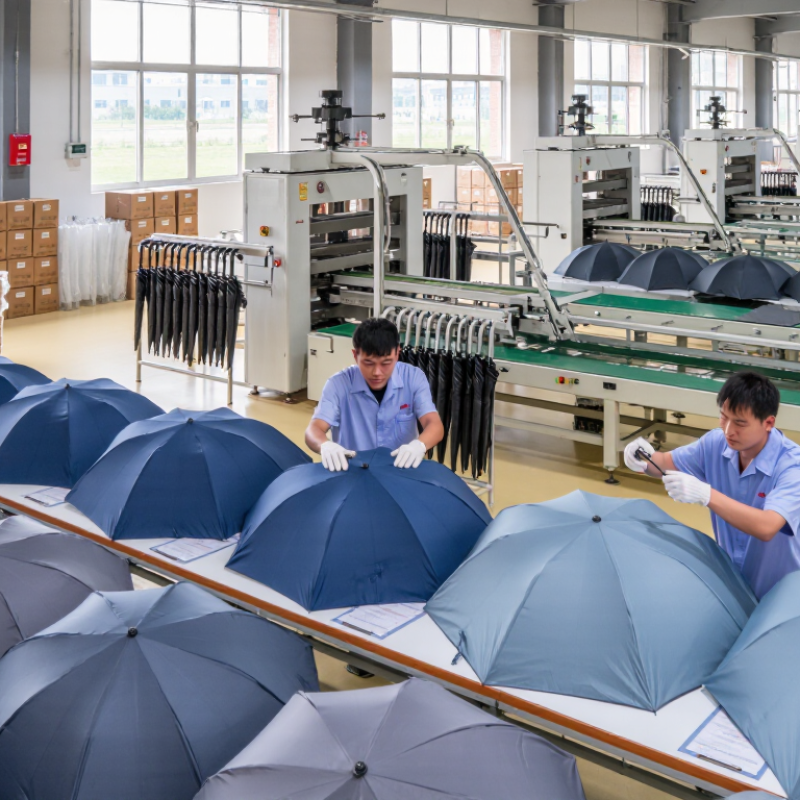
YH umbrella manufacturers serve global buyers through coordinated design, production, inspection, and export services. Their role extends beyond sewing canopies. They help retailers select frame structures, waterproof fabrics, handle materials, and packaging for different climates. A buyer in a rainy coastal city may need stronger ribs and corrosion-resistant shafts. A promotional distributor may prioritize compact folding sizes and color consistency.
Experienced sourcing teams usually inspect fabric coating, seam strength, opening cycles, and carton protection. They also compare pre-production samples with finished goods. Small details matter. A loose rivet can damage customer trust. Clear specifications, batch records, and stable communication make international orders more reliable. Buyers should request test reports, production photos, and independent inspection options before approving large quantities. These steps reveal practical competence, not just attractive catalog claims.
Global demand also exposes weaknesses. A sample may perform well, while a rushed production batch shows uneven stitching. That possibility deserves attention. Manufacturers that accept corrective feedback often build stronger long-term relationships. They can adjust rib thickness, improve water repellency, or revise packaging after field reports. Still, buyers should verify every claim and avoid relying on promises alone. Weather conditions, shipping delays, and changing retail preferences can affect results. Careful cooperation remains essential.
Criteria for Evaluating the Seven Best YH Umbrella Manufacturers
Evaluating the seven best YH umbrella manufacturers requires more than comparing catalogue photos. Grand View Research estimates the global umbrella market will grow steadily through 2030, increasing pressure on suppliers to prove capacity and consistency. Buyers should review factory experience, monthly output, material traceability, and documented quality controls. An ISO 9001 certificate helps, but it does not replace production records or independent inspections.
Test the details.
A dependable manufacturer should provide canopy tear results, frame-cycle testing, wind-resistance data, and colorfastness reports. EN 13561 and ISO 7779 are useful reference points, although umbrella specifications vary by product type. The selected factories should also explain fabric density, coating thickness, shaft material, and automatic-opening durability in plain language. UN Comtrade trade data can help buyers compare export patterns, but shipment volume alone does not prove workmanship.
Practical evaluation matters. Request pre-production samples, then compare eight to ten units from the same batch. Check loose ribs, uneven stitching, sharp metal edges, and water pooling after a controlled spray test. Sedex-style social audits may reveal labor and safety risks, while recycled-content claims need certificates and chain-of-custody evidence. I would not overtrust a perfect sample; factories often prepare those carefully. A stronger decision combines audit findings, failed-test transparency, response speed, packaging performance, and three recent buyer references. Mistakes still happen. The best supplier is the one that records them and corrects them quickly.
Comparing Product Types, Materials, and Customization Capabilities
For global buyers, comparing umbrella manufacturers starts with product type. Compact folding models suit commuters and retail displays. Golf umbrellas offer wider coverage and stronger frames. Straight umbrellas provide a familiar, durable format. According to Grand View Research, the global umbrella market is projected to grow steadily through 2030, supported by urban travel and seasonal weather demand. That growth does not make every supplier equally capable.
Materials reveal practical differences. Fiberglass ribs resist rust and flex better than ordinary steel. Polyester can reduce cost, while pongee fabric usually feels denser and supports sharper printing. Recycled polyester is increasingly requested, although buyers should verify recycled content certificates. The Textile Exchange Materials Market Report 2024 notes continued growth in preferred fiber adoption, but traceability remains uneven. A cheaper canopy may look acceptable indoors. Outdoor testing can expose weak stitching, water seepage, or poor colorfastness.
Customization should cover more than a logo. Experienced manufacturers can adjust canopy panels, handle shapes, shaft finishes, packaging, and opening mechanisms. Ask for pre-production samples, pull-force tests, spray tests, and carton-drop records. ISO 9001 certification may indicate controlled processes, but it does not guarantee excellent umbrellas. That needs evidence. One overlooked issue is minimum order quantity; complex molds and custom colors often increase it sharply. Buyers should compare landed cost, lead time, replacement parts, and inspection terms, not only the quoted unit price. Mistakes happen, even with experienced teams.
Assessing Quality Control, Certifications, Pricing, and Minimum Orders
For global buyers, choosing among YH umbrella manufacturers requires more than attractive catalog photos. In factory audits, I look for fabric inspection records, shaft alignment checks, and live opening tests. A reliable supplier should explain how often inspectors sample production. Ask for defect limits, not vague promises. Water-repellent coating should survive repeated spray testing, while ribs must resist controlled bending. Small details matter. Some factories pass final inspection but lack traceability when defects appear months later. That gap deserves attention.
Certifications can support trust, but buyers should verify scope, issuing body, and expiry dates. A certificate alone does not prove every umbrella meets the same standard. Request recent test reports, material declarations, and samples linked to the production batch. Pricing should include fabric grade, printing method, packaging, inspection, and shipping terms. The cheapest quote may hide thin panels or unstable handles. Minimum order quantities also affect cash flow. A 3,000-piece MOQ may suit retailers, but smaller tests can reveal demand with less risk. I would negotiate a pilot order, although some suppliers may charge more per unit.
Tips: Compare three written quotations using identical specifications. Order pre-production samples. Photograph cartons before dispatch. Clarify replacement terms for bent ribs and color variation. Keep conversations in writing. One practical lesson is easy to miss: delivery speed means little if inspection happens too late.
Choosing the Right YH Umbrella Manufacturer for Your Business Needs
The right YH umbrella manufacturer should match your market, not only your target price. Fortune Business Insights estimates the global umbrella market at about US$7 billion in 2023. It also expects roughly 5% annual growth through 2032. This growth increases supplier choices, but it also increases sourcing risks. Ask for product samples, factory audit records, and recent quality reports. Do not trust attractive photographs alone.
Check canopy waterproofing, frame strength, opening cycles, stitching, and handle comfort. A reliable supplier should explain test methods clearly. Request inspection standards, such as acceptable quality limits, before production begins. ISO 9001 certification can support process control, but it does not guarantee every umbrella will perform well. That distinction matters.
Match the manufacturer’s experience with your product category. Travel umbrellas need compact frames and repeated folding tests. Golf umbrellas require larger canopies and stronger ribs. Confirm minimum order quantities, sample charges, production capacity, packaging details, and replacement procedures. A supplier promising every feature may understand none deeply. That is a warning sign.
The World Bank reports that weather-related risks are becoming more disruptive across many regions. Buyers should therefore examine material consistency and delivery reliability, not just design. Ask how factories handle fabric shortages and failed inspections. No forecast is perfect. A small pilot order may reveal more than a polished sales presentation.
7 Best YH Umbrella Manufacturers for Global Buyers? - Choosing the Right YH Umbrella Manufacturer for Your Business Needs
A practical comparison framework for evaluating umbrella manufacturers without relying on unverified company or brand claims.
| No. | Manufacturer Evaluation Area | What Global Buyers Should Check | Useful Evidence | Business Importance | Best Fit |
|---|---|---|---|---|---|
| 01 | OEM and ODM Capability | Confirm whether the factory can manufacture custom canopy patterns, handle materials, printing, packaging, and product specifications. | Technical drawings, approved samples, customization list, and written production specifications. | High | Private-label retailers, promotional distributors, and importers. |
| 02 | Material and Component Quality | Review canopy fabric, frame metal, ribs, runners, stretchers, handle construction, and corrosion-resistance requirements. | Material declarations, component samples, incoming inspection records, and product testing reports. | High | Buyers selling in rainy, windy, or high-humidity markets. |
| 03 | Quality-Control System | Assess whether quality checks cover fabric defects, opening and closing performance, frame alignment, dimensions, printing, and packaging. | Inspection checklist, sampling plan, corrective-action records, and independent pre-shipment inspection options. | High | Large-volume buyers and distributors requiring consistent batches. |
| 04 | Production Capacity and Lead-Time Control | Verify monthly capacity, peak-season planning, production stages, order scheduling, and the ability to meet confirmed shipment dates. | Capacity statement, production schedule, lead-time quotation, and records from comparable orders. | Medium–High | Seasonal retailers and buyers working with fixed promotional dates. |
| 05 | Minimum Order Quantity and Sampling | Compare minimum order quantities, sample charges, sample approval procedures, tooling requirements, and small-batch flexibility. | Formal quotation, sample invoice, MOQ policy, and written approval workflow. | High | Start-ups, test-market buyers, and retailers with many designs. |
| 06 | Compliance and Export Documentation | Check the supplier’s ability to provide accurate commercial invoices, packing lists, shipping documents, material information, and destination-market test records when required. | Product test reports, factory audit documents, export references, and destination-country requirements checklist. | High | Importers supplying regulated retail or corporate procurement channels. |
| 07 | Packaging, Logistics, and After-Sales Support | Evaluate carton design, protection during transport, container loading, delivery terms, claim handling, replacement policy, and communication speed. | Packaging specification, carton dimensions, loading plan, Incoterms quotation, warranty terms, and service-level commitments. | Medium–High | International buyers seeking predictable landed costs and lower damage risk. |

