How to Choose the Best Chairs for Hotels
Choosing chairs for a hotel is not just a matter of matching colors to a lobby. Guests notice how a seat feels after a long journey, whether its arms make standing easier, and whether its fabric looks tired by evening. For every Chair Hotel project, the right choice balances comfort, durability, cleaning needs, and the character of the space. The balance can be difficult.
Furniture designer Charles Eames offered a useful design principle: “The details are not the details. They make the design.” In a hotel, those details include seat height, edge stitching, frame stability, and the sound a chair makes when moved across a hard floor. A beautiful chair may still disappoint if it wobbles, traps crumbs, or feels uncomfortable during a long meal. These are practical checks, not decorative afterthoughts.
This guide explains how to assess chairs for guest rooms, dining areas, lounges, and meeting spaces. It considers traffic levels, materials, ergonomics, maintenance, layout, and total cost over time. A compact lounge chair may suit a quiet reading corner, while a stackable model could serve a flexible event room. There is no perfect chair for every hotel. Even a careful shortlist can miss how a seat feels in real use, so testing samples with staff and guests is worth the extra effort. The goal is a considered choice that welcomes guests and holds up to daily demands.
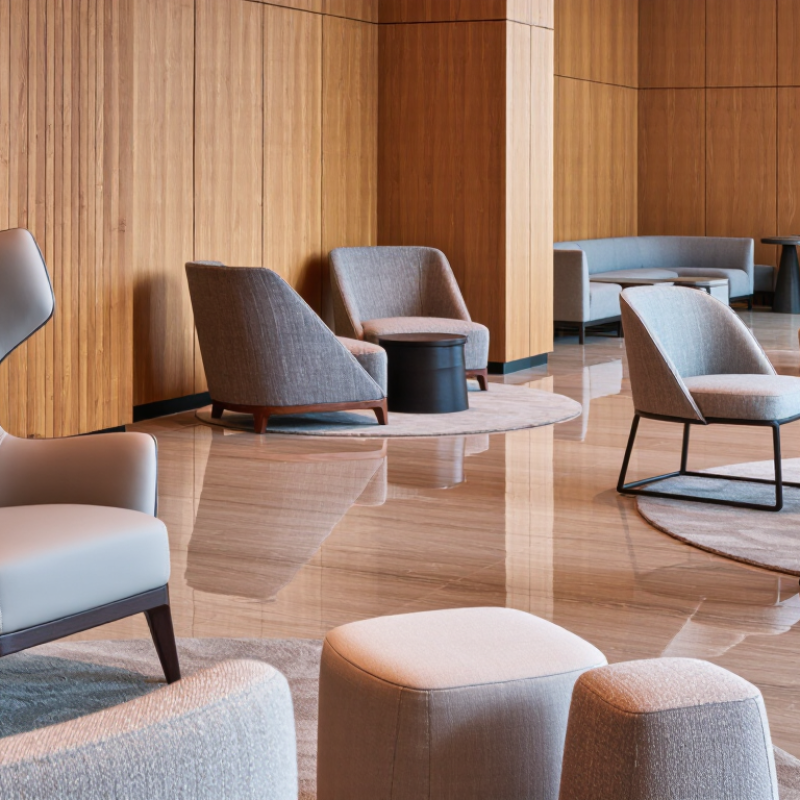
Identify the Seating Needs of Each Hotel Area
Start with what guests do in each area, not with a matching furniture style. In the lobby, visitors may wait with luggage or sit briefly between appointments. Choose stable chairs with arms and enough space for bags. A restaurant needs easy-to-clean seats that staff can move quickly during busy service. In guest rooms, comfort matters more over longer periods. A supportive chair near a desk or window can make the room feel more useful.
Meeting rooms call for chairs that slide quietly and fit close together without crowding guests. Poolside seating should tolerate damp towels and frequent cleaning; test how quickly cushions dry. Check seat height, weight, and cleaning instructions before ordering. Ask housekeeping staff to try the chairs, too. Their feedback can reveal awkward corners or heavy frames that a product description will not. Even careful planning misses things. A chair that looks inviting in a showroom may feel cramped beside a small hotel-room desk.
Tips: Measure walking paths with chairs pulled out, not tucked in. Test a sample during a full shift. Small comfort details matter.
Compare Chair Types for Different Guest and Staff Uses
Hotel chairs should match the work and mood of each space. In a lobby, lounge chairs with supportive arms help guests settle in while waiting; firm seats are easier to rise from. Dining chairs need stable legs, wipeable surfaces, and enough clearance for servers carrying trays. A soft fabric may feel inviting, but spills can make it a poor choice near breakfast service. Small details matter.
Guest-room chairs serve a different purpose. A compact, lightweight chair beside a desk can support brief work without crowding luggage or drawers.
For conference rooms, stackable chairs save storage space, but check seat comfort before expecting guests to sit through long sessions. Staff areas call for durable, easy-to-clean seating that adjusts to different users.
A chair suited to a front-desk employee may not work for housekeeping staff who move between tasks. Test the fit. Measure seat height against desk height, and check whether chair feet scrape hard floors. There is rarely one perfect model for every department. In practice, matching upholstery and frame finishes across all rooms can look tidy, yet it may ignore real differences in cleaning needs and daily wear.
Evaluate Comfort, Ergonomics, and Accessibility
Choosing hotel chairs means considering how guests use them, not just how they look in a showroom. A lobby chair may hold someone for ten minutes, while a dining chair may need to stay comfortable through a long meal. Test chairs with people of different heights and builds. Notice whether feet can rest on the floor and whether the seat edge presses behind the knees. Small details matter.
Good ergonomics should feel supportive without forcing one rigid posture. Look for a stable backrest, a seat that does not slope too sharply, and enough room to shift position. Armrests can help guests sit down and stand up, especially older visitors or anyone with limited mobility. But bulky arms may prevent some people from pulling close to a table. Try the chair in its actual setting.
Accessibility also depends on space around the chair. Leave clear routes, and avoid models that are unusually low, deep, or difficult to move. A firm seat can make standing easier, though firmness alone does not guarantee comfort. It is easy to overvalue plush padding during a quick test; guests may feel differently after an hour. Check the chair at the table, beside the bed, and near the entrance before deciding.
Assess Materials, Durability, and Maintenance Requirements
Hotel chairs face constant use, from breakfast service to late check-ins. Choose materials that suit each space, not just its appearance. Metal and hardwood frames can be durable, but inspect joints, fasteners, and the underside for weak points. Sit down and shift your weight; a slight wobble may become a daily annoyance. Upholstery matters too. Smooth, wipeable surfaces can speed up cleaning, while textured fabrics may conceal small marks but hold dust. Request material samples and test them with the cleaning products your staff already uses.
Tips: Check seat seams and frame connections. Ask suppliers for care instructions and replacement-part availability. Compare samples under your hotel’s lighting.
Maintenance needs can change the true cost of a chair. A pale fabric may look inviting in a quiet lounge but show spills near a busy café. A darker finish is not automatically easier to maintain; scratches and dust can stand out. Set a simple inspection routine for loose screws, frayed seams, and uneven feet. Clean spills promptly, and avoid harsh products unless the material guidance permits them. Even careful planning misses something. Review chairs after a few months of real use, then adjust cleaning routines or placement where wear appears fastest.
Balance Design, Space, and Budget When Selecting Chairs
How to Choose the Best Chairs for Hotels
Balance Design, Space, and Budget When Selecting Chairs
Hotel chairs influence how a room feels and how easily guests move through it. In a lobby, a curved lounge chair can soften a stone-and-glass interior. In a breakfast area, compact chairs may keep pathways open during busy mornings. Match the chair’s scale and finish to the room, but check comfort in person. Comfort matters. A seat that looks elegant in a showroom may feel too firm after a long wait.
Measure the usable floor area, not just the room’s overall dimensions. Leave clear routes around tables and doors, and test how chairs move when guests pull them out. Stackable or lightweight options can help staff reset event spaces quickly. Measure twice. Still, maximizing capacity can make a dining room feel crowded; a few fewer seats may create a calmer experience. That trade-off deserves a real layout test.
Set a budget that includes more than the purchase price. Consider cleaning time, replacement parts, fabric durability, and how often staff must move each chair. A lower-cost fabric might suit a quiet lounge but show marks quickly near a busy entrance. Request samples and check them under the room’s actual lighting. Even careful planning can miss small annoyances, such as chair legs catching on floor joints. Ask staff to move a sample chair through normal service before ordering in quantity.
How to Choose the Best Chairs for Hotels
Balance design, space, and budget when selecting chairs for guest rooms, dining areas, and lounges.
The chart compares representative chair footprints, calculated from typical width × depth dimensions. Actual sizes vary by design; allow additional room for movement and chair pull-out. Compact side or stackable chairs can suit high-density spaces, while larger upholstered and lounge chairs create a more relaxed feel. Compare durability, maintenance needs, and total cost of ownership before buying.