

7 Tips for Choosing the Best Entrance Front Door
Choosing an Entrance Front Door involves more than matching its color to your home. The door affects curb appeal, comfort, privacy, and everyday security. It also faces rain, sunlight, temperature changes, and repeated use. A beautiful option may not perform well if its materials or installation do not suit your climate. Details matter.
Start with the opening itself. Measure its width, height, and depth, and note the direction in which the door swings. Then compare materials such as wood, fiberglass, and steel. Each has advantages, maintenance needs, and possible drawbacks. Check the frame, weatherstripping, threshold, and locking hardware—not just the door panel. A draft near the bottom can make a well-insulated door feel like the wrong choice. Measure twice.
The right design should feel welcoming while meeting your household’s practical needs. Consider natural light, privacy, accessibility, and how often the entrance gets used. Look for clear product specifications, warranty terms, and installation guidance from reputable manufacturers. If measurements, structural changes, or fitting details seem uncertain, ask a qualified installer to assess them. A checklist helps, but it cannot account for every older home or unusual entryway. Some details are easy to miss. The following seven tips will help you compare options carefully, ask better questions, and choose a door that suits your home—not just a showroom display.
Assess Your Entrance Dimensions, Orientation, and Exposure
Tip: Measure the rough opening, not just the existing door slab. Record its width, height, and depth at several points; older frames can be uneven. Check the threshold and nearby trim, too. A few millimeters may affect fitting. Measure twice.
Tip: Note which way the entrance faces and how the door swings. A north-facing entry may stay damp longer, while strong afternoon sun can heat or fade exposed surfaces. Watch the doorway during rain and at different times of day. Wind-driven water matters. Also check that the handle, steps, and nearby walls leave enough room for the door to open fully. It is easy to focus on appearance and miss this daily clearance.
Tip: Match the door’s construction and finish to its exposure. A sheltered porch offers different conditions from an entry facing open wind or direct sunlight. Consider weather sealing, a durable finish, and glazing that suits your need for daylight and privacy. Look for water marks or drafts around the frame before choosing. These clues help, but they do not reveal everything; local climate and installation quality matter too. A careful site check is useful, though it can still miss seasonal changes.
Compare Door Materials, Durability, and Maintenance Needs
Choosing an entrance door means balancing weather resistance, upkeep, and insulation—not just appearance. The 2024 Cost vs. Value report by Remodeling magazine estimated a national average cost of $2,355 for steel entry-door replacement and a resale value of $4,430. That figure measures estimated resale value, not lifespan, so it should not decide your purchase alone. The U.S. Department of Energy notes that steel and fiberglass doors generally offer more insulation than wood doors. Check the door’s actual specifications, too.
Tip 1: Compare materials. Steel is often budget-friendly, but inspect the finish for scratches that could expose metal to rust. Tip 2: Consider fiberglass where rain and temperature swings are common; it resists moisture and needs little repainting. Tip 3: Choose wood for its natural grain, but expect periodic sealing or painting. Tip 4: Read the National Fenestration Rating Council label, when available, and compare U-factor and air-leakage ratings. Lower heat transfer matters in cold weather.
Tip 5: Look closely at the frame, threshold, and weatherstripping; a strong slab cannot fix gaps that let drafts in. Tip 6: Ask how hinges, glass inserts, and hardware should be maintained. Tip 7: Match care demands to your routine. A shaded porch may protect a finish, while a door facing afternoon sun can fade faster. I would still inspect samples in natural light; online color previews can be misleading.
Choosing an Entrance Door: Durability and Maintenance
A general comparison of common door materials. Scores use a relative 1–5 scale; higher durability is better, while higher maintenance means more upkeep.
Fiberglass generally needs less routine upkeep, while wood typically needs more frequent protection from moisture and weather. Actual performance depends on product construction, climate, installation, and care.
Evaluate Locks, Frames, and Overall Security
Start with the lock, but inspect the frame around it. A strong deadbolt can still be vulnerable if its strike plate is loose or attached only to thin trim. Look for a sturdy plate secured into the structural framing, with screws suited to the door assembly. Ask a qualified installer to check compatibility rather than assuming longer screws always fit. Feel the difference. A firm, smooth latch is reassuring; sticking may signal poor alignment, not better security.
Tip Close the door and gently test for movement near the latch. Noticeable play can point to loose hardware or a frame that needs adjustment. Check the hinges, too, especially on outward-opening doors. Confirm their fasteners are secure and that the door sits evenly in the frame. It is easy to focus on the lock and miss these basic weak points.
If the door includes glass, consider how close the panel is to the lock and whether it can be reached from outside. A reinforced frame and suitable glazing can reduce risk, but the right choice depends on the door’s construction. Ask a security professional to assess the whole entry, not just the lock cylinder. I might once have judged a door by its heavy feel; weight alone tells you little about its security.
Check Insulation, Weather Seals, and Energy Efficiency
A well-insulated front door helps limit heat loss, but the door slab is only part of the picture. Check its U-factor: a lower rating generally means better resistance to heat flow. Compare ratings for similar door types, and ask whether glazing is included. A decorative glass panel can change performance noticeably. Feel the edge. On a cold day, a chilly strip near the frame may point to a gap rather than a poorly insulated slab.
Weather seals should compress evenly when the door closes. Look for intact weatherstripping along both sides and the top, plus a sweep or adjustable threshold at the bottom. A thin line of daylight is a warning. So is a draft you can feel with your hand. Seals wear down, and even a quality door can leak if the frame is out of square. That detail is easy to miss. When testing a replacement, check that the latch catches without forcing the door; an overly tight seal can make it difficult to close. Ask an installer how the frame will be insulated and sealed, then review the work around the trim. Small gaps filled poorly can undermine the door’s energy performance.
Choose a Design, Finish, and Installation Plan That Fits Your Home
7 Tips for Choosing the Best Entrance Front Door
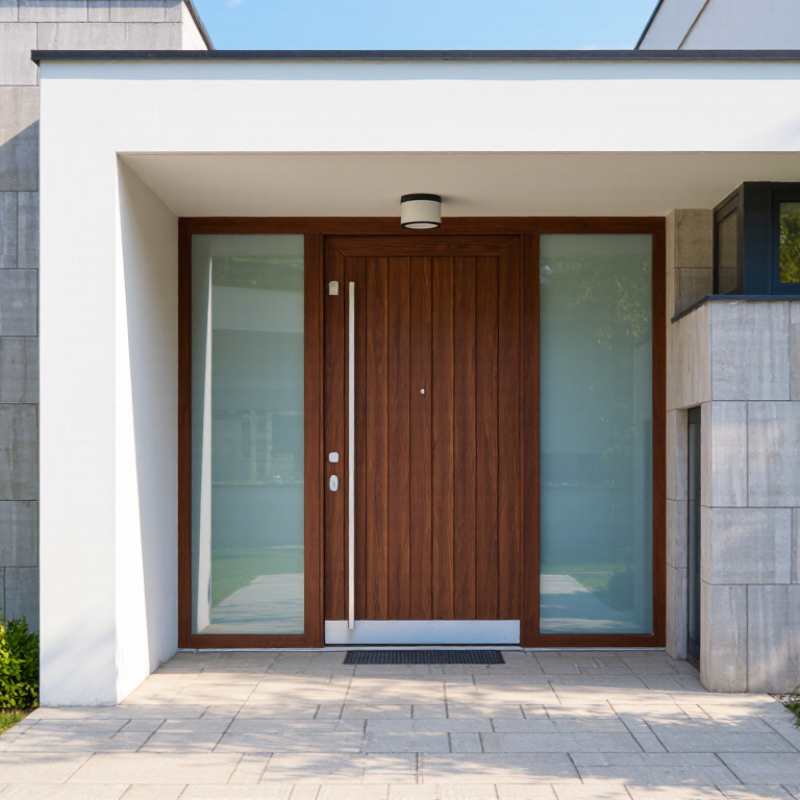
Choose a door that suits your home’s architecture and daily routine. A simple, glazed design can brighten a shaded entry, while a solid panel offers more privacy. Tip 1: Check the door’s swing and clearances before choosing a style. Tip 2: Compare finishes in daylight; a color that looks warm indoors may appear cooler outside. Small details matter.
The finish should handle your local weather and the exposure of your entrance. Direct sun can fade some colors, while wind-driven rain may test the edges and seals. Ask how often the finish needs care, and inspect a sample near your porch. It may still look different once installed. Tip 3: Match the material and finish to the conditions at your doorway, not just the showroom.
Plan installation before ordering. Measure the opening, including its width, height, and depth, and have a qualified installer confirm the figures. Tip 4: Discuss the threshold, weatherstripping, and flashing as part of the same plan. These details help limit drafts and water entry. Tip 5: Confirm the door’s handing, hardware locations, and delivery access. Tip 6: Ask who will remove the old door and repair trim. Tip 7: Leave time to check the fit and seals after installation. A beautiful door is only part of the job.
7 Tips for Choosing the Best Entrance Front Door - Choose a Design, Finish, and Installation Plan That Fits Your Home
| Tip | What to Consider | Design and Finish | Installation Plan |
|---|---|---|---|
| 1. Measure the opening carefully | Record the opening width and height at several points, along with the wall depth. Check whether the existing frame is square and in good condition. | Confirm the door size and configuration before choosing panel details, glazing, or hardware. | Have the installer verify the opening and finished floor height before ordering. A replacement door may require adjustments if the opening is uneven or damaged. |
| 2. Choose a suitable material | Compare maintenance needs, climate exposure, insulation options, appearance, and budget. Performance varies by construction and product specifications. | Wood offers a natural appearance and may need periodic refinishing. Fiberglass can imitate wood grain and generally needs less routine finish maintenance. Steel doors commonly have a protective painted finish; damaged coatings should be repaired as directed. | Ask how the frame, threshold, and surrounding wall will be protected from moisture. Follow the manufacturer’s care and installation instructions. |
| 3. Match the style to your home | Consider the home’s architectural style, exterior colors, porch, and nearby windows. | Use panel shapes, glazing, and color to complement the façade. Check finish samples outdoors, where daylight can make colors look different. | Confirm that trim, sidelights, and any transom will fit the available space and coordinate with the existing exterior details. |
| 4. Balance privacy and natural light | Decide how much daylight and visibility you want at the entrance. | Clear glass admits light but provides less visual privacy. Textured, patterned, or obscured glazing can limit direct views. Decorative glass should be checked for its stated safety and performance ratings. | Confirm the glazing configuration, orientation, and any local requirements before ordering. Make sure the installation preserves the door’s weather seals. |
| 5. Check energy and weather performance | Look for documented performance information, including insulation value, air leakage, weatherstripping, and glazing details where applicable. | Choose a finish and configuration appropriate for the door’s exposure to sun, rain, and temperature changes. A door’s overall performance also depends on its frame and installation. | Plan for a properly fitted threshold, continuous weatherstripping, and sealed gaps around the frame. Ask the installer how water will be directed away from the opening. |
| 6. Plan security and hardware together | Consider the lockset, deadbolt, hinges, frame, and strike area as parts of one entry system. | Select hardware that suits the door’s style and intended use. Check that the lock and handle are compatible with the door’s thickness and preparation. | Ensure the frame is securely fastened and the latch aligns properly. If adding electronic hardware, confirm power, connectivity, and backup access arrangements. |
| 7. Confirm accessibility and installation details | Consider the door’s swing, clear passage, threshold height, and approach space. Applicable accessibility and building requirements vary by location. | Choose a handle and threshold that are practical for the household and consistent with the home’s appearance. | Agree on who will remove the old door, dispose of debris, protect the work area, and finish interior and exterior trim. Verify local permit requirements and inspect the door’s operation and seals after installation. |

