
How to Choose the Best Fireproof Insulation?

Choosing the best Fireproof Insulation is not simply a matter of selecting the material with the highest temperature rating. Real buildings behave as connected systems. Walls, joints, fasteners, membranes, and installation quality can all influence fire performance.

Dr. Richard G. Gann, a respected fire-science researcher, offers a useful principle: “Fire safety is a systems issue, not a single-material decision.” This idea matters when comparing mineral wool, calcium silicate, aerogel products, and other insulation options. A material may resist flame in a laboratory sample, yet perform differently when compressed, exposed to moisture, or fitted around electrical penetrations. Small gaps can become serious pathways. Installation details matter.

Look closely.

A reliable choice should begin with the building’s fire-risk profile. Consider the required fire-resistance period, operating temperature, moisture exposure, acoustic needs, and available installation space. Check independent test reports and product certifications. Confirm that the tested assembly matches the wall or ceiling design, rather than trusting a product label alone.

Experience also reveals uncomfortable limitations. “Fireproof” does not mean indestructible. Some products remain stable under intense heat but lose effectiveness when poorly supported. Others provide excellent thermal resistance but create practical handling challenges. I have found that cost comparisons can also mislead, because labor, detailing, maintenance, and replacement risks may exceed the purchase price.

This guide will examine those trade-offs carefully. It will help readers compare Fireproof Insulation by tested performance, installation reality, durability, and trustworthy evidence—not by marketing language alone.
How to Choose the Best Fireproof Insulation?

What Fireproof Insulation Means and Why It Matters

Fireproof insulation is not simply material that never burns. It is insulation tested to resist ignition, slow heat transfer, or protect a building assembly for a defined period.

That distinction matters during a fire. A protected wall can stay cooler on the opposite side. Occupants may gain more time to escape. Firefighters may gain safer access.

In practice, selection should go beyond a product label. Check fire ratings, smoke behavior, moisture resistance, and installation requirements.

A tested material can perform poorly when gaps surround pipes, cables, or electrical boxes. Small openings matter. Fire follows weak paths.

Choosing the best insulation begins with the building’s actual risks. A kitchen wall may need different protection from a garage ceiling or furnace room.

Mineral-based insulation often tolerates high temperatures, while other materials may fit tightly or control moisture better. Neither advantage should stand alone.

Request independent test evidence, then confirm the complete wall, ceiling, or roof assembly meets local building codes. Thickness, joints, fasteners, vapor controls, and protective boards can change performance.

A common mistake is trusting a neat-looking installation. Compressed sections can create thin spots. They are easy to miss. “Best” is not universal, either.

Budget, climate, access, and future repairs all affect the decision. Older buildings deserve extra care because hidden cavities may connect separate rooms. A qualified fire-safety professional should review uncertain conditions before installation.

How to Assess Fire Resistance Ratings and Safety Standards

How to Choose the Best Fireproof Insulation?

Fire resistance ratings should be your starting point, not your only decision. A product may resist flame for 60 minutes, but that rating applies to a tested wall, ceiling, or floor assembly. It may not apply when installed differently. Check the complete test report, including thickness, fixing method, joints, and supporting materials. Standards such as ASTM E119, EN 13501-1, or local equivalents can help, but they measure different performance categories. Fire resistance and reaction to fire are not the same thing.

Look for clear evidence from accredited laboratories and qualified inspectors. A reliable document should show the test method, classification, temperature exposure, and limitations. On real projects, small gaps around pipes or electrical penetrations often weaken protection. I have seen specifications focus heavily on insulation thickness while overlooking these details. That is an easy mistake. Reconsider the full assembly, not just the material.

Tips: Match the rating to your building code and occupancy risk. Ask for current test reports, installation instructions, and maintenance requirements. Confirm whether moisture, compression, or aging changes performance. Do not accept vague claims such as “fireproof” without a stated rating. Keep photographs of installed barriers and sealed penetrations. Labels can be incomplete. Verify them.

Which Fireproof Insulation Materials Fit Different Applications

How to Choose the Best Fireproof Insulation?

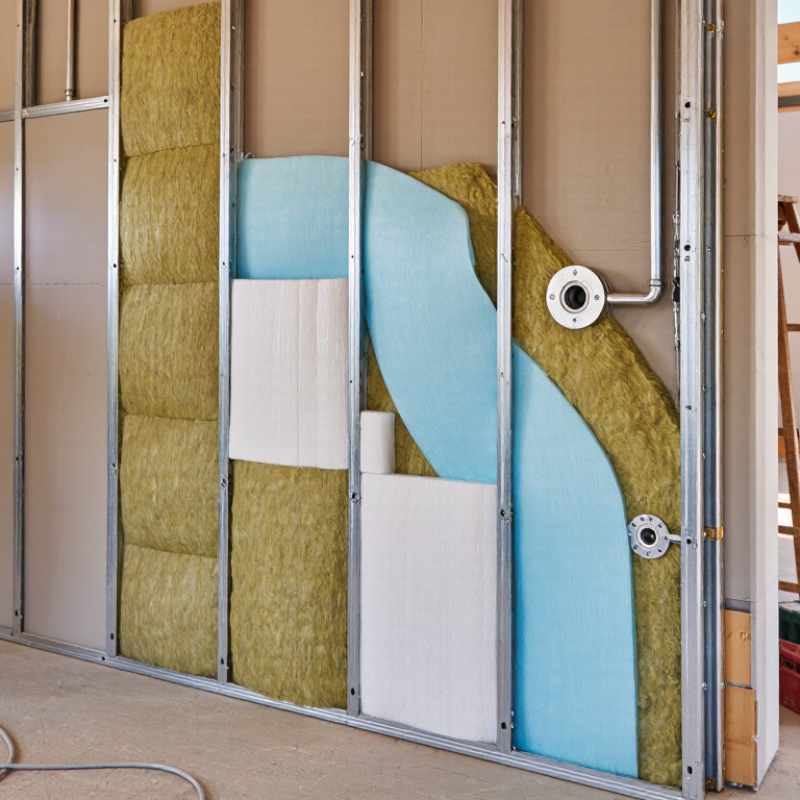
The right fireproof insulation depends on location, temperature, moisture, and mechanical stress. Mineral wool suits walls, ceilings, and service shafts because it resists fire and reduces sound transfer. It also handles moderate moisture, but poor installation can create gaps around joints and fasteners.

Calcium silicate works well around boilers, furnaces, and industrial ducts. It remains stable at high temperatures and offers useful structural support.

Ceramic fiber fits extremely hot equipment, such as kiln linings and furnace doors. However, it needs careful handling and suitable surface protection.

For lighter construction, expanded perlite or vermiculite boards may provide thermal resistance without adding much weight. A material used successfully in one workshop may fail in a damp plant room. That difference is easy to overlook.

Tips: Check the required fire rating, service temperature, thickness, and moisture exposure. Review independent test reports and local building requirements. Keep insulation continuous around pipes, corners, and penetrations. Small openings matter. Ask a qualified installer to confirm compatibility with adhesives, metal surfaces, and protective coverings. Do not rely on the word “fireproof” alone; performance depends on the complete tested system.

How to Compare Thermal Performance, Durability, and Cost

How to Choose the Best Fireproof Insulation?
How to Compare Thermal Performance, Durability, and Cost

Thermal performance should begin with the installed R-value, not the label on the package. The U.S. Energy Information Administration reports that space heating uses about 42% of household energy, while cooling uses roughly 8% (2020 Residential Energy Consumption Survey). Mineral wool commonly provides about R-3 to R-4 per inch, while rigid polyisocyanurate can reach approximately R-6 to R-7. These figures change with temperature, moisture, and workmanship. Small gaps matter.

Fire resistance requires more than a high melting point. ASTM E119 evaluates complete wall or floor assemblies, including joints, fasteners, and framing. A material alone cannot guarantee a one-hour rating. NFPA’s Fire Loss in the United States report recorded more than one million U.S. fires in 2023, with billions in property damage. That makes tested assembly performance more useful than dramatic product claims. It also exposes a common mistake: ignoring penetrations around pipes and cables.

Durability affects the real cost. Check whether insulation resists water absorption, compression, settlement, and repeated temperature changes. Compare installed cost, inspection needs, energy savings, and replacement risk over the building’s service life. A cheaper material may become expensive after moisture damage or poor fitting. I often compare price too early. That is imperfect. A careful site inspection can reveal more than a polished estimate. No spreadsheet captures every mistake.

How to Choose the Best Fireproof Insulation?

Comparing Thermal Performance, Durability, Fire Resistance, and Cost

The chart uses an indicative 0–100 comparison index, where a higher score represents better performance. Thermal performance is based mainly on typical thermal conductivity values; fire resistance considers non-combustibility and high-temperature capability; durability reflects moisture resistance and expected service stability; cost efficiency reflects typical material and installation cost ranges.

Typical reference ranges: mineral wool 0.034–0.045 W/m·K, calcium silicate 0.050–0.080 W/m·K, cellular glass 0.038–0.050 W/m·K, perlite insulation 0.040–0.060 W/m·K, and PIR 0.022–0.028 W/m·K. Actual performance depends on density, thickness, moisture, installation quality, and the complete fire-rated system.

How to Select and Install the Right Fireproof Insulation Safely

Choosing fireproof insulation starts with the building assembly, not the product label. “Fireproof” is often imprecise. Select materials tested for the required fire rating, such as ASTM E136, ASTM E84, or ASTM E119, where applicable. Confirm the wall, ceiling, or floor assembly rating with local building requirements. Mineral wool can resist high temperatures, while other insulation types may require protective gypsum layers. Moisture, density, thermal performance, and acoustic needs also matter. A higher R-value alone does not guarantee fire safety.

NFPA’s Home Structure Fires report found that cooking equipment caused 53% of reported home structure fires from 2017 to 2021. Heat sources deserve careful detailing. Keep insulation away from chimneys, flues, recessed lights, and electrical equipment unless the entire system is approved for that use.

Seal cable and pipe penetrations with listed firestop materials. Do not compress batts or leave gaps. Small openings can weaken a tested assembly. A recurring site lesson is uncomfortable: installation errors often matter more than the insulation specification.

Tips: Read the product’s safety data sheet before work. Wear gloves, eye protection, and suitable respiratory protection. Cut batts tightly around framing, but avoid forcing them into cavities. Check ventilation paths before closing walls. Photograph hidden firestopping for future inspection. Older buildings may contain hazardous insulation materials, so testing should precede removal. When drawings conflict with site conditions, pause and ask a qualified fire-protection professional. Guessing feels efficient, but it can create an expensive and dangerous correction later.