

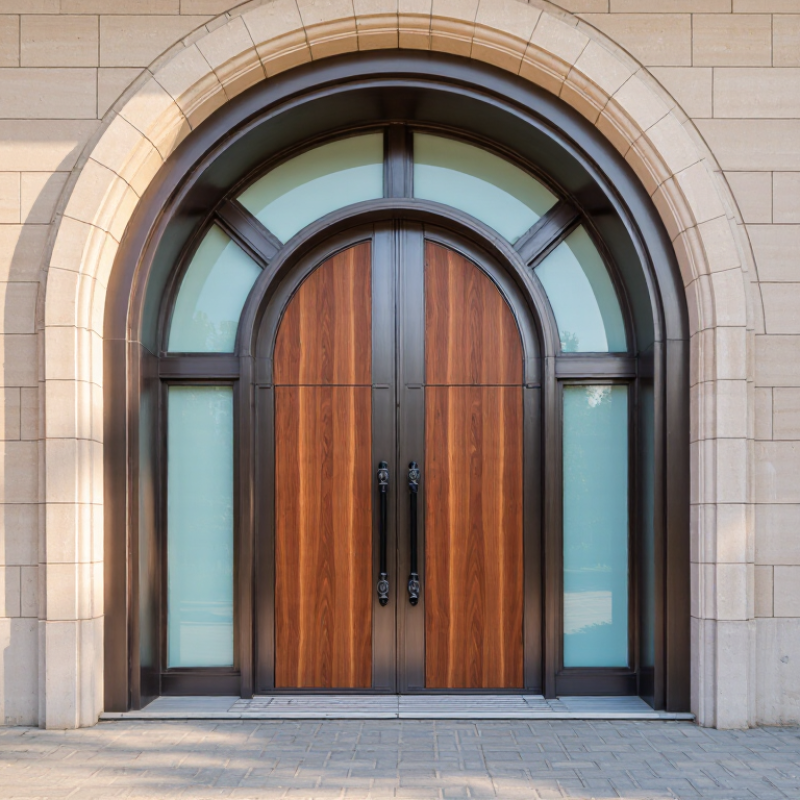
Top China Arched Front Door Manufacturers for Global Buyers

Choosing among the top China Arched Front Door manufacturers requires more than comparing online prices. Global buyers need evidence of craftsmanship, material control, testing, and reliable export service. A beautiful doorway can still fail when its frame twists, its finish fades, or its hardware does not suit the project.

Architectural authority Louis Kahn once observed, “A door is not simply a door. It is a passage through an order of things.” His words remain relevant to every Arched Front Door purchase. The curve affects structure, proportion, weather sealing, and installation accuracy. Experienced Chinese manufacturers usually offer steel, solid wood, aluminum, fiberglass, and mixed-material designs. Each option brings different strengths. Solid wood gives warmth. Steel supports security. Aluminum reduces maintenance. Fiberglass can handle demanding climates.

This guide examines manufacturers through practical buyer concerns. It considers factory experience, design capability, welding or joinery quality, powder coating, glass specifications, packaging, and after-sales communication. It also looks at custom dimensions, thermal performance, opening direction, threshold details, and production lead times. These details matter on a real jobsite.

No ranking is perfect. Supplier information changes. Product photos can also hide small defects. Therefore, buyers should request drawings, samples, inspection records, and clear warranty terms before ordering. A trusted manufacturer should answer directly and document its process. That is not glamorous. It is necessary.

The strongest supplier may not be the cheapest. It should deliver an Arched Front Door that fits the building, survives transportation, and performs after installation. Small details often decide the result.
Top China Arched Front Door Manufacturers for Global Buyers

What Defines a Reliable Arched Front Door Manufacturer in China

A reliable arched front door manufacturer in China should show more than attractive photographs. Practical experience appears in accurate measurements, stable bending methods, and repeatable assembly. Ask for drawings with the arch radius, frame depth, glass specification, and opening direction. Clear answers reveal technical confidence. Vague promises do not.

Material control matters at the entrance. The manufacturer should identify steel, aluminum, timber, or composite grades, surface treatments, and hardware sources. Request sample corners, coating reports, and test records for air leakage, water resistance, wind pressure, and thermal performance. Results should match the proposed configuration, not a similar model. Factory quality checks should cover welding, alignment, seal compression, glass fitting, and final dimensions. A small tolerance error can create a visible gap around a curved frame.

Reliable suppliers communicate carefully from quotation to delivery. They confirm lead times, packing methods, installation limits, and replacement procedures in writing. Pre-shipment inspections can expose problems before a container leaves China. Yet no manufacturer is perfect. Even an experienced factory may misread a drawing or underestimate local weather. A useful partner admits this risk and proposes a correction process. Buyers should compare physical samples, review production records, and test communication under pressure. Trust grows through evidence, not polished language.

What Defines a Reliable Arched Front Door Manufacturer in China?

A practical buyer-evaluation framework for comparing manufacturers of custom arched front doors. The percentages represent recommended purchasing priorities and are not company or brand performance data.

Compliance documentation and weather performance receive the highest weighting because exterior doors must satisfy applicable building requirements while resisting air, water, wind, and temperature exposure. Material quality, customization accuracy, quality control, traceability, and after-sales support complete the evaluation.

Key Materials and Craftsmanship Used in Arched Front Doors

Top China Arched Front Door Manufacturers for Global Buyers

Key Materials and Craftsmanship Used in Arched Front Doors

A reliable arched front door begins with carefully selected materials. Solid hardwood offers warmth, visible grain, and a traditional feel. However, it needs stable moisture control before production. Engineered wood can reduce warping in changing climates. Steel provides strength and slim sightlines, while aluminum resists rust and requires less maintenance. Many premium doors combine these materials with insulated cores and weather-resistant finishes.

Craftsmanship shapes the final performance. Skilled workers build the curved frame with accurate templates and controlled bending. Small gaps around the arch can cause drafts or uneven sealing. Hand sanding helps create a smoother surface, especially near carved details. Multi-point locks, reinforced hinges, and laminated glass also improve daily security. From project experience, the sample often looks perfect, but installation conditions may change the result. The wall opening must be measured again before fabrication.

Tips

Ask for material samples, moisture data, and finish specifications. Check how the door handles heat, rain, and direct sunlight. Request drawings showing frame depth, hinge positions, and threshold design. A workshop should explain its quality checks clearly. If the arch is unusually wide, confirm reinforcement methods before ordering. Do not judge craftsmanship from photographs alone. Compare corner joints, coating edges, glass alignment, and seal compression. Even careful production can miss a small detail. That detail matters.

Top China Arched Front Door Manufacturers for Global Buyers - Key Materials and Craftsmanship Used in Arched Front Doors

Door Element Common Material Options Typical Industry Specifications Craftsmanship and Quality Controls Performance Considerations
Door Leaf Solid hardwood, engineered wood, steel, aluminum, or fiberglass composite Common leaf thickness: approximately 45–90 mm, depending on construction and thermal requirements Moisture-controlled timber, accurately bonded layers, reinforced corners, and dimensional inspection before finishing Material selection affects weight, thermal insulation, weather resistance, maintenance, and service life
Arched Frame Laminated wood, galvanized steel, stainless steel, or thermally broken aluminum Frame depth commonly follows the wall system; custom radius and springline dimensions are required for each project CNC shaping, segmented arch assembly, welded or mechanically joined corners, followed by radius and squareness checks The frame must remain stable under door weight, wind load, temperature changes, and repeated operation
Core Construction Solid wood, mineral wool, polyurethane foam, honeycomb board, or composite reinforcement Insulated cores are selected according to the target U-value, fire requirements, and door thickness Uniform filling, controlled bonding pressure, void prevention, and verification of panel flatness Mineral wool can support fire-performance goals, while foam cores generally provide efficient thermal insulation at low weight
Exterior Surface Natural wood veneer, HPL, powder-coated metal, automotive-grade paint, or fiberglass skin Exterior-grade coatings are typically applied in multiple primer, color, and protective layers Surface sanding, edge sealing, controlled spray application, curing, and visual inspection under consistent lighting UV exposure, humidity, coastal salt, and freeze-thaw cycles should be considered when specifying the finish
Glazing Tempered glass, laminated glass, insulated glass units, or decorative leaded glass Double glazing is commonly used for improved insulation; safety glazing is required in many door locations Arched glass templates, accurate glazing rebates, compatible gaskets, drainage paths, and sealant continuity Glass selection influences safety, daylight, acoustic control, solar gain, privacy, and overall door weight
Weather Sealing EPDM or silicone compression seals, threshold gaskets, backer rods, and exterior-grade sealants Continuous perimeter sealing is preferred, with a properly detailed sill and threshold transition Mitred or continuous gasket installation, seal compression checks, and water-management detailing at the sill Correct sealing helps reduce air leakage, water penetration, drafts, and noise transmission
Hardware System Stainless steel, brass, zinc alloy, or corrosion-resistant coated steel Multi-point locks, adjustable hinges, closer systems, handles, and cylinders are selected by door weight and security needs Hardware load calculation, reinforced fixing points, hinge alignment, lock engagement, and operating-cycle testing Hardware grade should match exposure conditions, security expectations, door mass, and local code requirements
Arch Formation Method Bent laminated timber, CNC-machined solid sections, segmented wood voussoirs, welded metal, or formed composite profiles Common designs include semicircular, segmental, elliptical, and eyebrow arches Full-size templates, CAD drawings, mock-up verification, controlled joints, and matching of the arch radius to the opening The arch geometry must be coordinated with wall openings, glass templates, trim, hardware clearance, and installation tolerances
Joinery and Reinforcement Mortise-and-tenon joints, dowels, finger joints, structural adhesives, steel plates, or concealed reinforcement Reinforcement is concentrated around hinges, locks, glazing openings, and curved transitions Joint fit checks, adhesive curing control, concealed fasteners, and inspection of stress-prone areas Good joinery limits warping, cracking, joint opening, and movement caused by seasonal moisture changes
Factory Testing Dimensional gauges, coating inspection tools, moisture meters, glass checks, and hardware test fixtures Typical checks include dimensions, diagonals, surface finish, operation, seal contact, and accessory completeness Pre-shipment inspection, photographic records, packing verification, and review against approved shop drawings Final acceptance should be based on project drawings, agreed tolerances, applicable building codes, and test requirements
Recommended Buyer Documentation Approved drawings, material samples, hardware schedules, glazing details, and installation accessories Include opening width and height, arch radius, springline, wall thickness, handing, threshold, and finished-floor level Request shop drawings, finish samples, sample corner details, packing lists, and installation instructions before production Clear documentation reduces measurement errors, manufacturing rework, installation delays, and disputes over finish or performance

Note: Specifications shown are general industry reference ranges. Final material selection, dimensions, testing, and compliance requirements should be confirmed against the destination market, project drawings, and applicable local building codes.

How China’s Leading Manufacturers Serve Global Buyers

For global buyers, sourcing an arched front door from China involves more than comparing prices. Experienced manufacturers begin with drawings, opening sizes, wall conditions, and local climate data. They can produce steel, aluminum, timber, or composite doors with curved frames and insulated cores. A reliable supplier confirms hinge positions, threshold details, glass specifications, and finish samples before production. Small details matter.

Professional factories usually support project-specific customization and export documentation. They provide shop drawings, material certificates, coating data, and inspection photographs. Export teams coordinate container loading, moisture protection, and carton markings for different markets. Buyers should request test reports matching the intended region. Check wind pressure, thermal performance, water resistance, and fire requirements separately. Standards vary. A certificate alone is not enough.

The strongest partnerships include a sample review and a written tolerance schedule. This helps buyers check the arch radius, surface color, lock alignment, and installation clearance. Yet communication can still fail when measurements are converted incorrectly or design changes arrive late. I have seen attractive samples become costly revisions because site conditions were never confirmed. A careful manufacturer asks questions early, records every change, and explains what it cannot guarantee. Buyers also need independent inspections before shipment, rather than relying only on factory photographs. That extra step may feel slow, but it protects the final installation.

Quality Standards, Customization, and Export Capabilities

For global buyers, quality begins with measurable testing, not attractive catalog images. The 2023 UNEP Global Status Report states that buildings consume about 30% of global final energy. Well-sealed arched doors can support better indoor comfort and lower heat loss. Manufacturers should provide air-infiltration, water-penetration, and structural-test records. Relevant benchmarks include ASTM E283, ASTM E331, and EN 14351-1. Factory quality systems should also follow documented inspection procedures, preferably under ISO 9001 controls.

Customization requires engineering discipline. Buyers can request thermal-break aluminum, insulated glazing, laminated safety glass, concealed drainage, and corrosion-resistant hardware. The arch radius must match the opening survey precisely. Small errors become expensive on installation day. A useful supplier should issue CAD drawings, section details, color samples, and a written approval sheet before production. Custom work is not always perfect. Site measurements may change after demolition, so final dimensions need rechecking.

Export capability is more than shipping a crate overseas. Reliable manufacturers should explain packaging materials, moisture protection, loading photographs, and replacement procedures. They should prepare commercial invoices, packing lists, certificates of origin, and test documentation accurately. The World Bank’s Logistics Performance Index 2023 highlights the importance of shipment tracking and supply-chain reliability for international trade. Buyers should also confirm Incoterms, production milestones, and inspection points. A pre-shipment inspection can reveal scratched finishes, incorrect glass, or weak corner protection before departure. Experienced factories usually provide trial samples, but samples still need comparison with mass production.

How to Evaluate and Select the Right Chinese Door Manufacturer

Choosing an arched front door manufacturer in China requires more than comparing online prices. Start by checking factory experience with curved frames, insulated panels, and exterior-grade finishes. Ask for recent project photos, production videos, and a physical sample. A polished catalog is useful, but it proves little alone.

Review material specifications carefully. Confirm the door core, frame thickness, glass type, hinge capacity, weather seals, and surface coating. Request test reports for water resistance, air leakage, wind pressure, and thermal performance when relevant. Reliable manufacturers should explain tolerances clearly, not hide behind vague phrases such as “premium quality.” Measure the arch height, spring line, width, and wall opening twice. Small errors become expensive after installation.

Communication is another practical test. Send a detailed drawing and check whether the technical team identifies missing dimensions or installation risks. Ask how they control color consistency across several doors, protect corners during packing, and handle replacement parts. A factory audit can reveal useful details, including storage conditions, welding quality, and inspection records. However, one visit cannot show everything. Samples may look excellent while mass production varies, so include approval checkpoints in the contract. Delivery planning also deserves attention: confirm packaging photos, container loading methods, production lead times, and export documents. No factory is perfect, and an early mistake in my evaluation would be trusting promises before verifying process evidence.