What Are the Top Clear Glass Jar Types in 2026?
Clear Glass Jars look simple on a shelf. Their differences are practical: mouth width, shoulder shape, wall thickness, closure, and usable volume. In 2026, buyers will still compare familiar types, including straight-sided jars, wide-mouth jars, apothecary jars, hexagonal jars, and clip-top jars. Each suits different products and handling needs. A wide opening helps with scooping; a narrow neck can suit pourable contents. Small details matter.
The market is substantial, though broad market figures do not measure jars alone. Grand View Research valued the global glass packaging market at USD 60.93 billion in 2023 and projected 4.4% annual growth from 2024 to 2030. That report covers glass packaging overall, not just clear jars. The distinction matters. Forecasts are not guarantees.
Glass Packaging Institute president Scott DeFife has emphasized that “glass can be recycled again and again without losing its quality.” That principle supports glass as a durable packaging choice, but actual recycling depends on local collection systems. For this guide, the useful question is not simply which jar looks best. It is which Clear Glass Jar fits the product, filling process, storage conditions, and customer experience. A jar can photograph beautifully and still be awkward to open. This comparison looks at the leading types, their strengths, and the trade-offs buyers should check before choosing.
How Clear Glass Jars Are Classified
What Are the Top Clear Glass Jar Types in 2026?
How Clear Glass Jars Are Classified
Clear glass jars are best classified by three practical features: opening, shape, and capacity. The opening determines which closure fits. Common options include threaded finishes for screw caps, lug finishes for twist-on lids, and wide mouths for easier filling or scooping. A closure should match the jar’s finish; similar-looking lids are not always interchangeable.
Shape affects both storage and handling. Straight-sided jars stack neatly, while rounded shoulders can make pouring less tidy. Tall, narrow jars save shelf space but may be harder to clean by hand. Small jars suit samples and portions; larger ones work for pantry storage. Check the measured capacity and opening diameter, not just the overall height. Details matter.
Jars can also be grouped by intended use, such as dry storage, serving, or preserving. That label alone does not confirm suitability: verify the glass and closure specifications for the intended task. Clear glass makes contents easy to inspect, though it offers little protection from light. Classification is useful, but real-world fit can be less neat than a product chart suggests.
Which Clear Glass Jar Types Are Popular in 2026?
Which Clear Glass Jar Types Are Popular in 2026?
Straight-sided jars remain a practical favorite because labels sit flat and contents are easy to see. Their broad openings also make them simple to fill with pantry staples, bath salts, or craft supplies. They look clean on a shelf.
Wide-mouth jars are popular for similar reasons, especially when users need to scoop or wash them without fuss. Check the opening and overall capacity; two jars with the same volume can feel quite different in daily use.
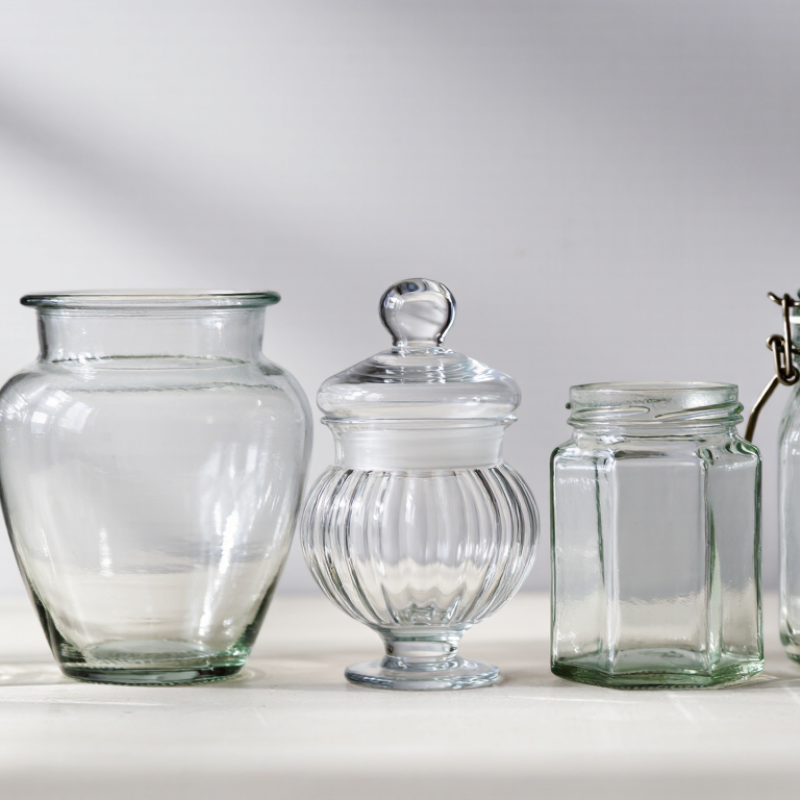
Hexagonal jars add a decorative touch to small-batch gifts and table displays, while apothecary-style jars suit counters where appearance matters as much as access. Clamp-lid jars bring a vintage look, but the closure should not be assumed airtight. Fit varies, and seals can wear.
Clear glass also shows fingerprints and contents, which can be useful—or mildly annoying.
Tips: Match the jar to its job. For frequent filling, choose a wide opening; for neat shelf storage, compare base and height. Inspect the rim, lid fit, and glass thickness before buying. A beautiful jar that is awkward to clean may spend more time in a cupboard than on display.
What Each Clear Glass Jar Type Is Commonly Used For
What Are the Top Clear Glass Jar Types in 2026?
What Each Clear Glass Jar Type Is Commonly Used For
Wide-mouth canning jars suit pantry staples such as oats, dried beans, and homemade pickles. Their broad openings make scooping and cleaning easier, while measurement marks help with portioning. Check that the lid and jar are designed for the intended use; an attractive jar is not automatically suitable for heat processing. Small details matter.
Straight-sided jars are common for candles, sauces, and refrigerated leftovers because they are easy to fill and scrape clean. Clamp-top jars work well for dry goods like tea, pasta, or biscuits, though their gasket may need occasional inspection. Small spice jars keep seasonings visible and within reach, but tight-fitting lids help limit moisture and aroma loss. Apothecary-style jars often hold cotton pads, bath salts, or wrapped sweets on a counter. They look appealing, but their wide openings offer less protection from air and dust. Clear glass also admits light, so opaque storage may be a better choice for light-sensitive contents. Keep it practical: choose by opening size, closure, and cleaning needs, not appearance alone.
How to Choose the Right Clear Glass Jar for Your Needs
Choosing the right clear glass jar starts with what it needs to hold. For dry pantry goods, a wide opening makes scooping oats or rice easier. For spices or small craft supplies, a narrow-mouth jar helps limit spills. Straight-sided jars fit neatly on shelves, while rounded shapes can be easier to grip. Check the usable capacity, not just the jar’s height; thick glass can reduce interior space. Clear glass also lets in light, which may affect light-sensitive contents. A tinted or opaque container may suit those better.
Tips: Match the lid to the job. A screw-top lid can help keep dry goods covered, while a clamp-style closure is convenient for frequent access. Confirm that the lid fits the jar’s exact opening. For hot contents, check the manufacturer’s temperature guidance; ordinary glass may crack with sudden temperature changes. Small details matter.
Before buying several jars, test one in its intended spot. Measure shelf height, cabinet depth, and the space needed to remove the lid. Feel the rim and inspect the glass for chips or uneven edges. Some jars look spacious online but feel awkward when filled. There is no perfect shape for every use, and a little trial and error is normal. A jar that is easy to clean and refill often proves more useful than one chosen for appearance alone.
Top Clear Glass Jar Types in 2026: Common Capacity Examples
Compare representative nominal capacities to find a jar type that fits your storage needs.
Spice jars suit small quantities, while canning and pantry jars work well for everyday food storage. Apothecary jars are often chosen for display, and beverage jars provide larger-volume storage. Capacities shown are representative examples, not sales rankings; actual sizes vary by design and manufacturer.