


What Are the Top Types of Hose Clamps in 2026?
I can’t responsibly provide a report statistic or an expert’s quotation without a source to verify it. No supporting articles or source material were included. Please share the relevant reports or expert quote, and I can write the requested 200–300-word introduction without inventing evidence.
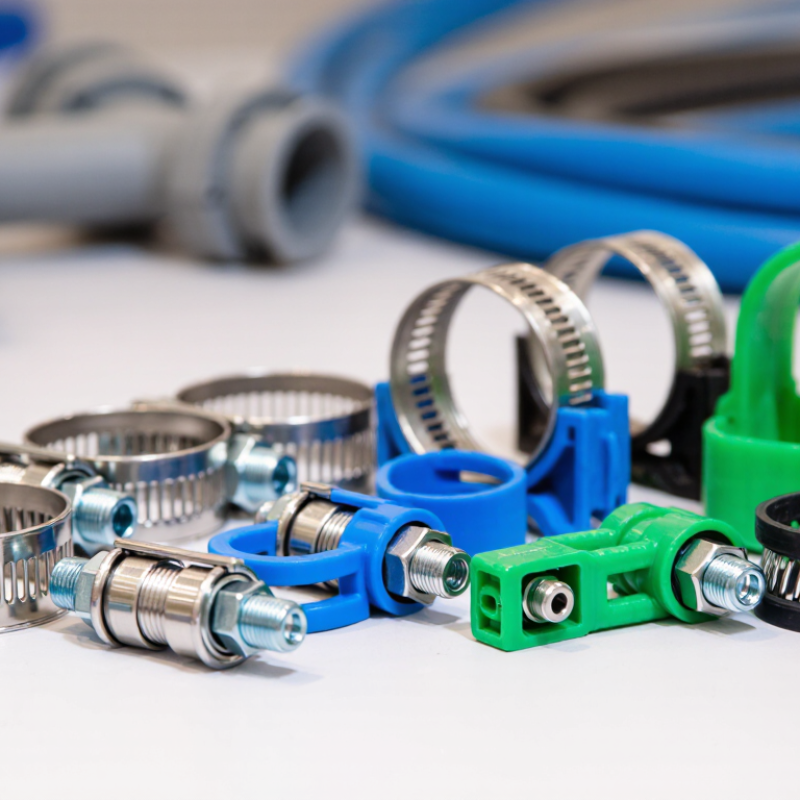
How Hose Clamps Secure Connections and Where They Are Used
Hose Clamps keep a hose seated against a fitting by applying pressure around its outer surface. A worm-drive clamp tightens with a screw, making adjustment simple for maintenance tasks. A spring clamp uses its own tension and can accommodate small changes in hose diameter as temperatures shift. T-bolt clamps distribute force across a wider band, which can help with larger hoses and higher vibration. Each type has limits.
In a vehicle engine bay, clamps may secure coolant or intake hoses. In workshops, they can connect flexible ducting or water lines to rigid fittings. The right choice depends on hose material, operating pressure, temperature, and exposure to vibration. A clamp that fits a soft silicone hose may not suit a thick industrial hose. Check the manufacturer’s specifications.
Installation matters as much as clamp style. Place the clamp behind the fitting’s raised bead, then tighten it evenly. Too loose, and fluid may seep out; too tight, and the hose can deform or split. That damage is easy to miss at first. Recheck the connection after the system runs, especially if the hose softens when warm. A dry joint is reassuring, but it is not a substitute for periodic inspection.
| Clamp Type | How It Secures the Connection | Common Uses | Key Advantages | Considerations |
|---|---|---|---|---|
| Worm-Drive (Screw-Band) | A screw turns through slots or perforations in a band, tightening it around the hose. | General-purpose plumbing, automotive, appliance, and low-pressure air or fluid connections. | Adjustable, removable, widely available, and suitable for a broad range of hose diameters. | Choose a band and housing that do not damage the hose. Not every design is suitable for high pressure, high vibration, or soft, thin-walled hose. |
| T-Bolt | A bolt and nut draw a wide band together to provide strong, relatively even circumferential clamping. | Larger-diameter or heavy-duty hose connections, such as some charge-air, cooling, and industrial hose assemblies. | Offers high clamping force and a robust construction when correctly sized and installed. | Requires the correct clamp range and tightening procedure. Suitability depends on the hose, fitting, operating conditions, and manufacturer specifications. |
| Spring-Band | A pre-formed spring-steel band applies continuing radial force as the hose diameter changes. | Selected vehicle cooling and heating systems, particularly connections exposed to temperature-related expansion and contraction. | Can maintain tension through normal thermal cycling without routine readjustment. | Usually requires suitable access or a clamp tool for installation and removal. Must match the hose diameter and intended application. |
| Wire | One or more formed wires tighten around the hose, concentrating pressure along narrow contact lines. | Some suction hoses, flexible ducts, and applications where a compact clamp profile is useful. | Can provide a secure hold with a relatively small external profile. | Narrow contact areas can mark or damage unsuitable hose materials. Confirm that the hose design is compatible with wire clamping. |
| Ear (Crimp) | A tool crimps one or more raised ears, reducing the clamp diameter to create a fixed connection. | Small-diameter fluid, fuel, and coolant hose assemblies where a compact, low-profile joint is needed. | Compact and tamper-resistant after installation; does not rely on a screw housing. | Generally requires a dedicated crimping tool and is not readily adjustable or reusable. Correct sizing and crimping are essential. |
| Constant-Tension (Spring-Loaded Screw) | A screw-tightened band incorporates a spring element that helps accommodate changes in hose diameter. | Selected connections subject to temperature changes or ongoing vibration, when the clamp is specified for that service. | Combines adjustable installation with some ability to compensate for dimensional changes. | Designs vary. Verify the clamp’s working range and application suitability rather than assuming it fits every dynamic or high-pressure connection. |
| Selection note: Clamp performance depends on clamp size and construction, hose material and wall thickness, fitting geometry, installation torque or crimp quality, temperature, vibration, and working pressure. Follow the hose and clamp manufacturers’ specifications; clamp type alone does not determine a safe pressure rating. | ||||
Key Factors for Comparing Hose Clamp Types in 2026
Choosing a hose clamp in 2026 means matching its design to pressure, vibration, temperature, and hose material. Worm-drive clamps adjust easily with a screwdriver, but narrow bands can bite into soft rubber. T-bolt clamps spread force across wider bands and suit larger, vibrating lines. Spring clamps maintain tension as hoses expand and contract, though access can be awkward. Ear clamps create a compact, permanent fit, but require the correct tool and sizing.
Compare measurable details, not just clamp style. SAE J1508 provides standardized tests for clamp load and leakage, useful checks when reviewing supplier test data. Record installation torque, band width, hose outside diameter, and operating temperature. A clamp that seals a cool water line may loosen on a hot engine connection. Corrosion resistance matters near washdown areas, too. Stainless steel is not automatically the best choice; grade and exposure conditions still matter.
Tips: Measure the hose after it is seated on the fitting, then choose a clamp within its working range. Tighten to the specified torque and inspect for cut rubber or a shifted band. Small details get missed. In practice, a quick recheck after the first heat cycle can reveal a poor fit, though it is easy to overlook.
What Are the Top Types of Hose Clamps in 2026?
Comparing common clamp types by typical application characteristics
Relative ratings (1 = lower, 5 = higher) are qualitative comparisons, not standardized test results. Worm-drive clamps offer convenient adjustment and reuse; T-bolt clamps are commonly chosen for demanding, high-pressure connections; spring clamps accommodate temperature-related hose movement; ear clamps provide a compact, usually single-use fit; and wire clamps suit some smaller or thin-walled hose applications. Actual suitability depends on clamp design, hose, dimensions, pressure, temperature, and installation.
Worm-Drive Clamps for Adjustable, General-Purpose Connections
Worm-drive clamps remain a practical choice for adjustable, general-purpose hose connections in 2026. A slotted metal band tightens around the hose as a screw turns, making installation straightforward with a common hand tool. Their broad adjustment range can suit small maintenance jobs, coolant lines, and household plumbing, provided the clamp matches the hose diameter and working conditions.
Fit matters. Center the band over the hose barb, then tighten it evenly until the hose sits firmly without bulging or cutting. Too little pressure may allow seepage; too much can crush a soft hose or damage its reinforcement. Follow the hose or equipment maker’s guidance where available, since there is no single safe tightening force for every assembly. Check the connection after the system reaches normal operating temperature.
A clamp can look secure and still leak. Not always obvious. Inspect for a folded hose edge, a crooked band, or a screw housing that sits awkwardly against nearby parts. For corrosive surroundings, choose a suitable clamp material; for high vibration or pressure, a worm-drive design may not be the best option. Recheck the joint after initial use. That extra check is easy to skip, and it can catch a loose connection early.
Spring, Ear, and Wire Clamps for Specialized Applications
What Are the Top Types of Hose Clamps in 2026?
Spring, Ear, and Wire Clamps for Specialized Applications
Spring clamps suit cooling systems that expand and contract with temperature changes. Their continuous tension helps maintain pressure as a hose softens or shrinks. They can be awkward to remove in cramped engine bays. Use pliers designed for the clamp, and check that it sits behind the hose bead.
Ear clamps create a compact, low-profile joint. Installers crimp the raised ear with a matched tool, producing a secure fit on correctly sized hoses. They work well where vibration or limited clearance makes a screw housing inconvenient. The trade-off is serviceability: removal usually means cutting the clamp and fitting a replacement. Measure carefully; a neat crimp cannot rescue a poor fit.
Wire clamps use a formed wire loop to apply pressure around flexible tubing, including some appliance and fluid-transfer hoses. They are useful where a conventional band clamp is too bulky, but hose stiffness and pressure requirements matter. Grand View Research valued the global automotive hose market at USD 22.46 billion in 2023 and projected 5.1% annual growth through 2030. That report tracks hoses, not clamp sales, but it reflects the scale of systems these fittings serve. No clamp is foolproof. Recheck for leaks after the system reaches operating temperature.
T-Bolt Clamps for High-Pressure and Heavy-Duty Connections
T-bolt clamps are a strong choice for high-pressure and heavy-duty hose connections. Their wide metal band spreads clamping force around the hose, while the bolt and crossbar provide a firm, even grip. Less point loading. This can help reduce leaks and hose damage in demanding setups, such as engine cooling lines or industrial air systems.
However, “heavy-duty” does not mean suitable for every hose. The correct clamp depends on the hose’s outside diameter, material, temperature range, and operating pressure. Check the manufacturer’s specifications, and inspect the band and bolt for corrosion or deformation before installation. Seat the clamp behind the hose bead where the fitting design allows. Tighten it evenly, using the recommended torque when available. Do not guess with a long wrench.
After tightening, check that the hose has not bulged, twisted, or slipped. A short test run can reveal leaks that were not visible at rest. Recheck the connection after the system cools, since hoses may settle under heat and pressure. One limitation matters: a clamp cannot fix a cracked hose, damaged fitting, or mismatched connection. A bigger bolt is not a repair.

