

What Is the Best Patio Door Replacement in 2026?
A patio door can transform a room—or leave a cold strip of air beside the sofa. In 2026, the best patio door replacement is not simply the most expensive model. It is the right door for your opening, climate, home, and budget. Sliding doors save floor space. Hinged French doors offer a wider, familiar opening. Both need careful measurement and weatherproof installation.
The U.S. Department of Energy reports that windows account for roughly 25%–30% of residential heating and cooling energy use. That figure applies to windows broadly, not patio doors alone, but it shows why glass and frame choices matter. Compare NFRC-certified U-factor and solar heat gain coefficient ratings, rather than relying on vague “energy-efficient” claims. Look for clear warranty terms, durable hardware, and compatible flashing. Details matter.
Building-science educator Allison Bailes emphasizes the importance of air sealing and installation quality to real-world building performance. That principle is especially relevant at a large glass opening: even an efficient door can disappoint if gaps remain around its frame. A useful replacement plan starts with the existing opening, local weather, and how the room is used. Do you want easier access to a deck, less glare on the floor, or a tighter seal during winter? There is no universal winner. This guide compares common patio-door types, materials, glass options, costs, and installation considerations, while noting where available data does not isolate patio doors from other windows. That distinction is easy to miss—and worth keeping in view.
How to Define the Best Patio Door for Your Home
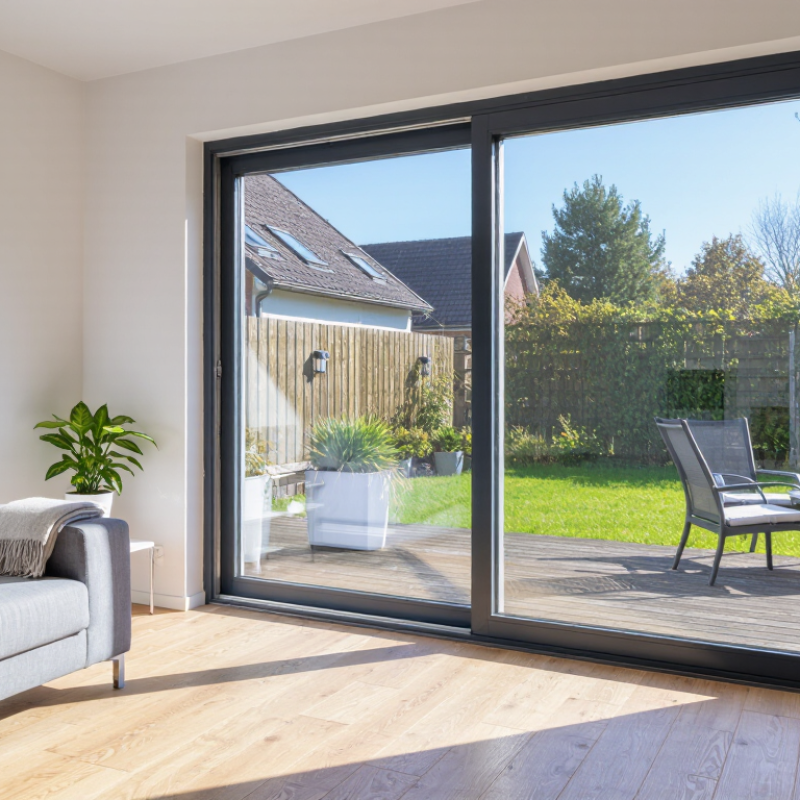
The best patio door is not automatically the largest or most expensive. It is the one that fits your room, climate, and daily habits. Start with daily use. Do you carry groceries through the opening, let a dog in and out, or need space for a chair beside the doorway? A sliding door can preserve floor space, while hinged panels need room to swing. Measure the clear opening, not just the old frame; replacement dimensions can be less straightforward than they look.
Next, consider comfort and upkeep. In a sunny room, suitable low-emissivity glass can help manage heat and glare. In a colder or drafty home, compare frame insulation, weather seals, and the quality of the installation—not just the glass label. Check that the threshold works for everyone using the door, and ask how the track drains and can be cleaned. Small details matter. A beautiful door that sticks after rain is not a good fit.
Security should include a dependable locking system and a frame fitted firmly to the surrounding structure. Ask an installer how they will handle any signs of moisture or damage around the opening. I would not choose from appearance alone; even careful research can miss a practical annoyance, like a handle that catches a curtain. The best choice is the one that performs well in your actual space, with maintenance you can realistically manage.
What Is the Best Patio Door Replacement in 2026? - How to Define the Best Patio Door for Your Home
| Door type | Typical installed cost (USD) | Space and operation | Potential advantages | Considerations | Often a good fit for |
|---|---|---|---|---|---|
| Sliding glass door | About $1,200–$4,000 | One panel slides parallel to a fixed panel; does not swing into the room or patio. | Space-efficient; broad glass area; convenient for frequent access. | Track and rollers need occasional cleaning and maintenance; only part of the opening is usable at once. | Homes with limited swing clearance or a preference for a simple, everyday entry. |
| Hinged French-style patio door | About $1,500–$5,000 | One or two panels swing inward or outward, depending on the configuration. | Wide opening when both panels operate; familiar hinged-door feel; many layout options. | Requires clear floor or patio space for the swing; weather sealing and installation quality matter. | Homes with enough clearance and a preference for a traditional, wide-opening style. |
| Multi-slide patio door | About $4,000–$15,000+ | Multiple panels slide and may stack or pocket into a wall, depending on design. | Can create a large opening and expansive glass wall; no hinged swing area. | Higher purchase and installation cost; needs careful measurement, structural planning, and precise track installation. | Large openings, major renovations, and projects prioritizing indoor-outdoor connection. |
| Folding patio door | About $4,000–$15,000+ | Several hinged panels fold and gather at one or both sides of the opening. | Opens a large portion of the wall; useful where a broad, flexible passage is desired. | Panel stack takes up space; more hinges and hardware require correct adjustment and upkeep. | Renovations designed around a wide opening and a clear place to park folded panels. |
| Lift-and-slide patio door | About $3,000–$10,000+ | A handle lifts the panel from its seals so it can roll along a track; closing lowers it back into place. | Designed for smooth movement of large panels; the lowered panel can engage its perimeter seals. | Usually costs more than a basic sliding door; requires a compatible frame, hardware, and professional installation. | Large-panel projects where easy operation and a robust sealing system are priorities. |
How to define “best”: Start with the opening size, available swing or stacking space, local climate, desired daylight, accessibility needs, and total project budget. For energy performance, compare the complete door’s certified U-factor and Solar Heat Gain Coefficient (SHGC); lower U-factors generally indicate less heat transfer, while the preferred SHGC depends on climate, orientation, and shading.
Cost ranges are broad U.S. planning estimates for replacement projects, not quotes. Final pricing varies with dimensions, materials, glazing, existing-frame condition, labor, permits, and any structural or finish work. Confirm measurements and obtain itemized local estimates before choosing.
Related Posts
-
What is the Best Type of Patio Doors with Windows for Your Home?
-
How to Choose Patio Doors with Windows in 2026?
-

Reliable Chinese Manufacturing of the Best Patio Doors for Global Buyers
-
8 Reasons Why Best Sliding Glass Patio Doors Enhance Home Value by 30 Percent
-
Exploring Best Patio Doors: Features, Usability, and Tips for Global Buyers
-
Common Challenges Faced When Selecting Best Patio Doors for Global Buyers