


How to Choose the Best Vinyl Patio Doors?
Choosing vinyl patio doors is not just a matter of finding a frame that looks clean beside your deck. The right choice should suit the opening, your local weather, and the way your household uses the space. A wide sliding door may preserve room for furniture, while hinged French doors need clear space to swing. Small details matter. Check the opening’s measurements, handle placement, and threshold height before comparing models.
Look beyond color and price. Compare frame construction, glass options, weather seals, and hardware, then review the manufacturer’s performance information and warranty. In colder or hotter climates, efficient glazing may help limit heat transfer, but results depend on the whole door and proper installation. Ask a qualified installer how the unit will be sealed and supported; even a well-made door can disappoint if it is fitted poorly. I should note that product ratings do not tell the entire story. Ease of cleaning, screen access, and how smoothly the door operates are practical concerns that can be overlooked in a showroom. A slightly lower price may not be the best value if replacement parts are hard to find. This guide explains what to compare, which trade-offs deserve attention, and how to choose vinyl patio doors with confidence—without assuming that one style fits every home.
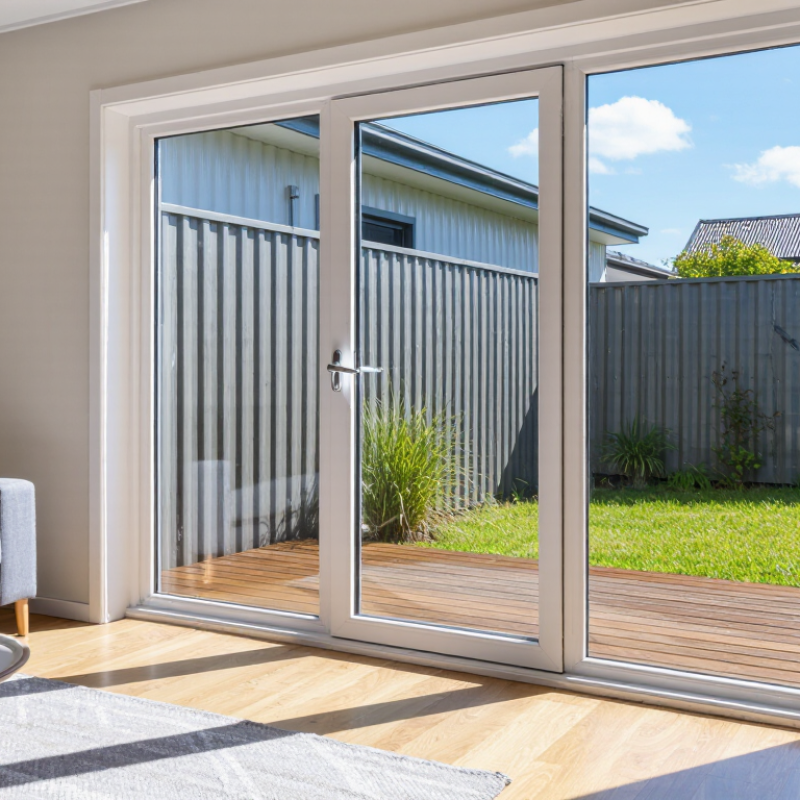
Understanding Vinyl Patio Door Types and Key Components
How to Choose the Best Vinyl Patio Doors?
Understanding Vinyl Patio Door Types and Key Components
Vinyl patio doors commonly come as sliding, hinged, or multi-panel systems. Sliding doors save swing space and suit narrow patios, but their tracks need regular cleaning. Hinged doors open wide, though furniture or outdoor steps can limit their clearance. Multi-panel designs create broad openings, but require careful attention to frame support and installation. Small details matter.
Look beyond the glass. Vinyl frames may contain internal chambers that help limit heat transfer; reinforcement can add stiffness, especially on wider panels. Check the insulated-glass unit, too: low-emissivity coatings, gas-filled spaces, and warm-edge spacers can affect comfort and condensation. The U.S. Department of Energy estimates windows account for 25–30% of residential heating and cooling energy use. That is a broad benchmark, not a patio-door performance prediction.
Inspect the sill, rollers, weatherstripping, and lock. A smooth showroom glide is useful, but it cannot reveal how a door performs after years of grit and seasonal movement. Compare National Fenestration Rating Council (NFRC) labels for U-factor and solar heat gain coefficient (SHGC), then match ratings to your climate and sun exposure. ENERGY STAR reports that certified window replacements can save energy compared with older, inefficient windows; that evidence is a reference point, not a guaranteed saving for every patio door. Check the exact product documentation before deciding.
How to Choose the Best Vinyl Patio Doors? — Understanding Vinyl Patio Door Types and Key Components
Vinyl Patio Door Types
| Door Type | Typical Configuration | How It Operates | Best Suited For | Key Selection Checks |
|---|---|---|---|---|
| Sliding patio door | Usually two panels, with one fixed panel and one operating panel; wider units may have additional panels. | The operating panel rolls horizontally along a track. | Rooms where a swinging door would use valuable floor or deck space. | Check that the panel rolls smoothly, the track is accessible for cleaning, and the locking mechanism engages securely. |
| Hinged French-style patio door | Commonly a pair of hinged panels; one or both panels may open, depending on the design. | Panels swing inward or outward on hinges. | Openings with enough clearance for a swinging panel and homeowners who prefer a traditional door operation. | Confirm the swing direction, required clearance, active-panel configuration, and threshold height before ordering. |
| Multi-slide patio door | Several panels arranged in a wider opening; panels may stack at one or both sides. Some systems offer pocketing configurations. | Multiple panels slide along tracks and gather at the opening or move into a wall pocket, if designed for it. | Large openings where a broad connection to an outdoor area is desired. | Vinyl availability and maximum panel sizes vary by system. Verify structural limits, track layout, panel stacking space, and installation requirements. |
| Folding patio door | Multiple connected panels that fold together; configurations depend on the system. | Panels move along a track and fold toward one or both sides of the opening. | Openings intended to create a wide passage when the door is fully open. | Folding vinyl systems are not available in every market. Check panel limits, hardware support, weather sealing, and the space needed for folded panels. |
Key Components to Compare
| Component | Purpose | What to Check When Choosing |
|---|---|---|
| Frame | Supports the door panels and attaches the unit to the rough opening. | Look for a frame suited to the opening and local exposure. Confirm installation and flashing details to help manage water around the door. |
| Sash or operating panel | Holds the glass and moves to open or close the door. | Check panel alignment, smooth operation, and the system’s stated size and weight limits. |
| Insulated glazing | Provides the glazed area and can reduce heat transfer compared with single-pane glass. | Compare the product’s NFRC-listed U-factor and Solar Heat Gain Coefficient (SHGC) for your climate and orientation. Lower values are not automatically best for every location. |
| Weatherstripping and seals | Help limit air and water entry where panels meet the frame and one another. | Check that seals are continuous, properly seated, and replaceable if they wear over time. |
| Rollers and track | Guide sliding panels and carry their operating load. | For sliding doors, test movement across the full track. Ask how the rollers are adjusted and how the track can be cleaned. |
| Locking hardware | Keeps the closed door secured and helps draw panels against their seals. | Operate the lock before purchase or installation. Confirm that the latch aligns correctly and that compatible replacement hardware is available. |
| Threshold and drainage | Forms the bottom transition at the doorway; system design may include drainage paths to manage water. | Consider accessibility, interior floor height, exposure to wind-driven rain, and the manufacturer’s installation instructions. |
| Screen | Allows ventilation while helping keep insects out when the main door is open. | Check whether a screen is included or optional, how it moves, and whether it can be removed for cleaning. |
Selection tip: Compare the complete door system—including frame, glazing, operating hardware, and installation requirements—rather than choosing by door style alone. Performance and available configurations vary by product and opening size.
Related Posts
-
What Is the Best Type of Vinyl Patio Doors?
-

Innovative Single Hung Replacement Windows Trends at the 138th Canton Fair 2025
-

Top 10 Tips for Choosing Doors and Windows for Your Home?
-
How to Choose Sliding Glass Patio Doors for Your Home?
-

How to Choose the Best Patio Doors for Your Home?
-
How to Choose Patio Doors with Windows in 2026?