How to Choose the Best Vinyl Doors?
Choosing the best vinyl doors requires more than comparing colors, prices, and showroom displays. The U.S. Department of Energy reports that windows and doors can influence roughly 25% to 30% of residential heating and cooling energy use. That figure makes frame quality, glass performance, and installation details practical concerns, not decorative upgrades. NFRC labeling can help buyers compare U-factor, solar heat gain coefficient, and visible transmittance. However, many consumers still focus on appearance first.
Building-envelope expert Joseph Lstiburek offers a useful principle: “A building is a simple machine. It keeps the outside out and the inside in.” His statement applies directly to vinyl doors. A well-selected unit should resist rain, drafts, unwanted heat, and daily impact. Look for reinforced frames, dependable weatherstripping, sealed glazing, and hardware designed for repeated operation. In coastal or storm-prone areas, independently tested impact resistance may matter more than a low purchase price.
Industry reports from the U.S. Department of Energy, ENERGY STAR, and the Fenestration and Glazing Industry Alliance provide useful performance guidance. Yet reports often group vinyl doors with windows or broader fenestration products. That makes vinyl-door-specific market figures less precise. It is an imperfect research gap, but an important one. This guide will examine thermal ratings, security features, maintenance needs, climate suitability, installation quality, and warranty terms. The cheapest door may not remain inexpensive after air leaks, water damage, or difficult repairs appear. Real experience matters. A sample corner, a smooth lock, and a visible drainage path can reveal more than glossy marketing language.
Understanding Vinyl Door Materials and Construction
How to Choose the Best Vinyl Doors?
Understanding Vinyl Door Materials and Construction
Vinyl doors are made from rigid PVC, often combined with stabilizers, pigments, and impact-resistant additives. The core matters. These ingredients help the door resist moisture, insects, and ordinary surface fading. However, not all vinyl profiles have the same density or wall thickness. Look closely. Thicker walls usually provide better stiffness, while poorly formulated material may become brittle in extreme temperatures.
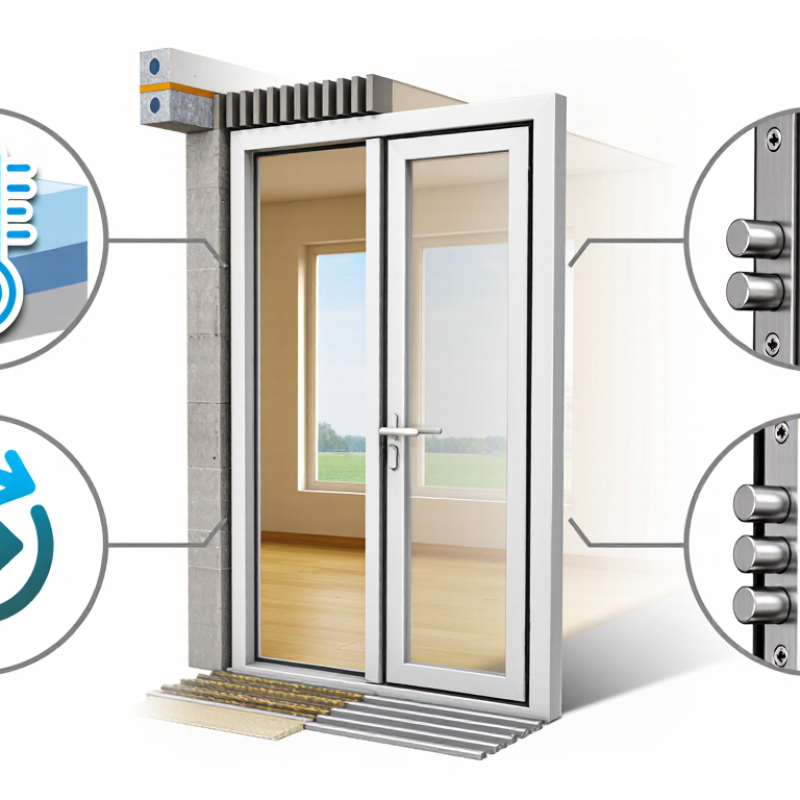
Construction quality depends on more than the outer skin. Heat-welded corners can create tight joints that reduce air leakage and water entry. Some frames include galvanized steel or composite reinforcement, especially around hinges and locking points. The door panel may contain foam insulation, which improves thermal performance without adding excessive weight. Check the glass seal too. A weak seal can allow condensation between panes, even when the vinyl frame remains sound.
In practice, small details often reveal long-term performance. Open and close the sample door several times. Notice whether it twists, rubs, or feels uneven. Inspect the sill for drainage channels and confirm that hardware is firmly anchored. Installation also matters; an excellent frame can perform poorly if the opening is not level. I have seen attractive doors fail because installers rushed the sill flashing. That detail is easy to miss. Local weather, sunlight exposure, and daily traffic should guide the final choice.
Identifying Your Home’s Door Style and Functional Needs
Choosing a vinyl door starts with understanding your home’s existing style. Study the roofline, window frames, siding, and entry proportions. A traditional home may suit a paneled door with balanced glass. A modern house often looks better with clean surfaces and narrow sightlines. Take photos at different times of day. Color can appear surprisingly different in morning shade.
Measure the opening, wall depth, threshold, and available swing space. Do not rely on old measurements. I once saw a replacement plan fail because the trim hid an uneven opening. That small mistake affected the frame, seal, and final appearance. A professional installer should check plumb, level, drainage, and surrounding damage before ordering. Ask how the vinyl frame handles moisture and temperature changes.
Your daily routine should guide the design. A busy entry may need a durable surface, secure multi-point hardware, and low-maintenance glazing. For a patio opening, consider traffic flow, screen use, and furniture clearance. In colder regions, compare insulation values and air-leakage ratings. In sunny rooms, review solar heat gain and glass placement. Families with limited mobility may prefer a low threshold and a wider clear passage. Confirm local safety and building requirements, especially for bedroom egress. A beautiful door can still be inconvenient. Function deserves equal attention.
Comparing Energy Efficiency, Durability, and Maintenance
How to Choose the Best Vinyl Doors?
Energy performance should guide your choice more than frame color. The U.S. Department of Energy estimates that windows account for 25–30% of residential heating and cooling energy use. A glazed vinyl door can contribute to that loss. Check the NFRC label for U-factor, solar heat gain coefficient, and air leakage. Lower U-factor limits heat transfer. Lower SHGC can reduce summer heat in sunny climates. Cold regions may benefit from moderate solar gain. Climate matters.
Measure carefully.
Durability depends on more than vinyl itself. Vinyl resists rot, moisture, and routine corrosion, but sunlight can affect color and seals over time. Look for products tested under AAMA/WDMA/CSA 101/I.S.2/A440 performance standards. Air and water ratings deserve attention. A weak sill or poor flashing can cause trouble, even with a strong door. DOE Building America guidance emphasizes continuous drainage and properly integrated flashing around openings. In practice, installation often decides whether a door performs well. That part is easy to underestimate.
Maintenance is usually simple. Rinse the surface, use mild soap, and inspect weatherstripping each year. Keep tracks clear of grit and check hinges or rollers for resistance. “Maintenance-free” sounds attractive, but it is not completely literal. Hardware wears. Seals age. NFRC ratings also assume correct installation, which is an important limitation when comparing products.
How to Choose the Best Vinyl Doors?
Comparing energy efficiency, durability, and maintenance across common vinyl door configurations
The index uses a 0–100 scale: higher scores indicate better overall performance. Energy-efficiency scores reflect typical insulated-door U-factor ranges, durability reflects reinforced frame and hardware construction, and maintenance reflects resistance to rot, corrosion, repainting, and frequent adjustment. Actual performance varies by glass package, installation quality, climate, and hardware.
Evaluating Sizes, Features, Glass Options, and Security
Choosing a vinyl door begins with the opening, not the showroom sample. Measure width, height, jamb depth, sill condition, and swing clearance. A small error can create shimming problems and air leakage. The U.S. Department of Energy’s Energy Saver guidance estimates that windows and doors can represent 25–30% of household heating and cooling energy use. That makes sizing and installation more important than color. Select a door that fits the rough opening, then check its U-factor and air-leakage ratings on an NFRC-certified label.
Glass affects comfort, daylight, and security. Low-emissivity insulated glass can reduce heat transfer, while a lower solar heat-gain coefficient helps in strongly sunlit rooms. NFRC rating guidance separates U-factor from SHGC; confusing them is an easy mistake.
Consider laminated glass near entrances. Its bonded inner layer may remain partly intact after impact. Tempered glass breaks more safely, but it is not automatically a stronger security barrier. Test standards matter.
Use a deadbolt, reinforced strike plate, and long screws anchored into framing. Multi-point locking may improve resistance, although poor installation can cancel that advantage. A perfect specification can still fail at the sill. Check drainage paths, compression seals, and threshold adjustment after installation. Larger glass may brighten a hallway, yet it can reduce privacy and increase solar gain. I would not choose it without reviewing the room’s orientation, local climate, and nighttime lighting.