Who Are the Top Vinyl Windows Manufacturers in China?
China’s vinyl windows sector deserves careful comparison, not a quick ranking. A polished showroom sample cannot reveal how a frame performs after years of sun, rain, and repeated opening. Buyers should examine profile design, weld quality, hardware, glazing options, and documented test results. Small details matter.
The U.S. Department of Energy’s Energy Saver guidance estimates that heat gain and heat loss through windows account for 25%–30% of residential heating and cooling energy use. That figure is not specific to China, but it shows why window performance deserves close attention. The National Fenestration Rating Council’s ratings, including U-factor and solar heat gain coefficient, offer useful comparison points. Building-envelope researcher Stephen Selkowitz of Lawrence Berkeley National Laboratory has emphasized the need to balance daylight, views, comfort, and energy performance. That is the practical test. A low price alone says little.
This guide introduces leading Chinese vinyl windows manufacturers and the evidence buyers can use to assess them. It considers product range, manufacturing capabilities, performance documentation, customization, and export experience. Company claims should still be checked against current certificates, test reports, and project references. Not every supplier publishes comparable data. That is an important limitation, and this overview cannot replace factory audits or project-specific technical review. The goal is a clearer shortlist—one grounded in verifiable details, rather than confident marketing language.
What Vinyl Windows Are and How They Are Made
Vinyl windows use rigid polyvinyl chloride profiles to hold glass, seals, and operating hardware. The material resists moisture and does not need routine painting, but frame performance depends on design and fabrication. It sounds simple. A poorly welded corner or blocked drainage path can still cause trouble.
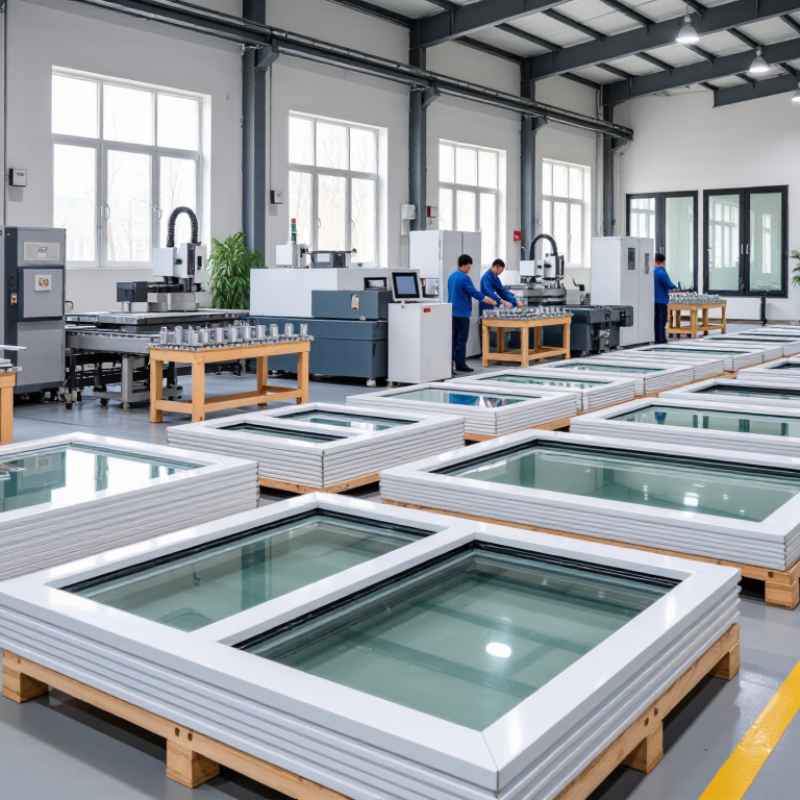
Production begins by blending PVC resin with stabilizers, pigments, and impact modifiers. The compound is heated and pushed through a shaped die to form long profiles. After cooling, workers cut the profiles, add reinforcement where specified, and weld frame corners. Glazing units, gaskets, locks, and drainage openings are then fitted. Careful factories check dimensions, corner joints, and sash movement; small inconsistencies can affect how a window closes.
Glass choice matters as much as the frame. Low-emissivity coatings and insulated glazing can help reduce heat transfer, while suitable seals limit drafts. The U.S. Department of Energy’s Energy Saver guidance estimates that windows account for about 25–30% of residential heating and cooling energy use. That figure is a useful reminder, not a promise for every home: climate, installation, orientation, and window condition all change results. For buyers comparing Chinese manufacturers, ask for test reports covering air leakage, water penetration, and thermal performance. A polished showroom sample is not enough. The paperwork and production checks deserve a close look.
China’s Vinyl Window Manufacturing Landscape
China’s vinyl-window manufacturing landscape combines PVC profile extrusion, window fabrication, glazing, and hardware supply. Many factories handle several stages, while others depend on outside profile or component suppliers. That matters. Differences in tooling, welding, and quality checks can affect corner strength, fit, and air sealing. The picture is uneven.
China’s National Bureau of Statistics reported 998.31 million square metres of completed real-estate development buildings in 2023, down 17.0% year on year. This figure is not a vinyl-window sales measure, but it signals pressure on new-build demand. Renovation work may offer another source of orders, though public data does not neatly separate vinyl-window replacements from broader home upgrades.
For buyers, compare test reports for the complete window, not just the PVC frame. Glass specification, steel reinforcement, weather seals, drainage paths, and installation quality all shape performance. Ask for air-tightness and thermal results tied to the supplied configuration. A small mismatch between tested and delivered parts can matter. Factory capacity is useful, but it does not prove consistent site performance.
Leading Vinyl Window Manufacturers in China
Leading vinyl window manufacturers in China serve home builders, renovation contractors, and overseas distributors. Their capabilities vary, so factory size alone is a poor measure of quality. Reliable manufacturers can explain frame profiles, steel reinforcement, glazing choices, drainage channels, and hardware compatibility. Ask for drawings and test reports for the exact window configuration you plan to buy. A rating for one design may not apply to another. Details matter.
Tips: Request a sample corner section and inspect its welds, seals, and finish. Confirm how the manufacturer checks dimensions and tests finished windows. Discuss packaging too: corner guards and secure loading can reduce damage during long-distance shipping.
A useful supplier also communicates realistic production times and flags design limits early. For example, a wide opening may need stronger reinforcement than a standard residential window. Compare written specifications, not just quoted prices. If a response is vague, ask for measurements or supporting documents. Even a careful review cannot remove every risk, and factory claims deserve verification. It is easy to overlook small details, especially drainage or replacement-part availability, until installation begins. Manufacturers that document changes and answer technical questions clearly are often easier to work with over time.
Comparing Vinyl Window Manufacturers in China: U-Factor Benchmark
U-factor measures how quickly heat passes through a window; lower values indicate better insulation. The range shown is an illustrative performance benchmark, not a ranking or a claim about any manufacturer. Request certified, project-specific test data when comparing products.
How Manufacturers Differ in Products and Capabilities
Chinese vinyl window manufacturers differ less by catalog size than by how consistently they control details. Some focus on standard sliding and casement units; others offer tilt-turn designs, custom colors, laminated glass, or integrated screens. Ask about profile depth, reinforcement material, chamber layout, and glazing options. A sample corner cut can reveal wall thickness and weld quality.
Small details matter.
Factory capability also includes tooling, testing, and order discipline. A capable supplier can explain how it checks air leakage, water resistance, and wind-load performance, then provide recent test records for the configuration you plan to buy. Ask whether the hardware, glass, and frame were tested together. Results from a different window size may not predict yours.
Production capacity matters only when lead times, packaging, and replacement-part support are clear. A polished showroom proves little. Ask for evidence. Installation limits are easy to overlook, especially with unusual openings or coastal exposure. Confirm drawings and tolerances in writing before placing an order. Even established factories can communicate unevenly.
Tips: Send the same opening sizes and performance requirements to each manufacturer. Compare written specifications, not just sample appearance. Keep one question open: who handles defects after delivery?
How to Evaluate a Chinese Vinyl Window Supplier
Evaluating a Chinese vinyl window supplier starts with the product, not the sales brochure. Ask for the exact profile system, wall thickness, reinforcement details, glazing options, and hardware schedule. Request a sample corner cut and inspect its welds, drainage paths, and gasket fit. Ask for proof. Clear answers matter more than broad claims about “premium quality.”
Check whether test reports match the window configuration you plan to order. A report for a different size, glass build-up, or opening style may offer little evidence. Confirm who performed the tests and when. Review production controls, defect records, and how the factory handles rework. If possible, compare a pre-production unit with the approved sample in daylight; tiny color or size changes can go unnoticed.
Discuss shipment details early: carton protection, labeling, spare parts, and the process for resolving damaged units. Ask for a written schedule with inspection points, not just a promised dispatch date. A factory visit or independent inspection can reveal workflow, but one visit is only a snapshot. Even a careful checklist cannot remove every risk. I would avoid judging a supplier by the showroom alone; it is a tempting shortcut, and not a very reliable one.